Friday, March 01, 2013

Prophet

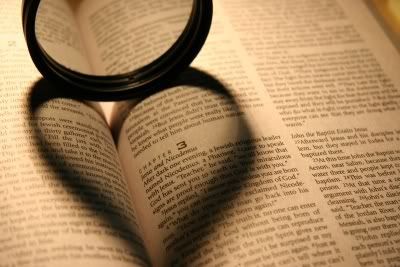
This afternoon I watched the PBS special on the women's movement, "The Makers." It was pretty amazing. And to follow up on my post about being a feminist earlier this week, it makes sense to me for this image to illustrate today's word. Prophets are those who can see the world as God sees--a world of justice and hope for all people. The women who came before, and the people who continue to work for justice, are indeed prophets.


one of the last frames of the 3 hour special...awesome
Day 15 of the Lent photo-a-day challenge
Day 

Earthly

They come from deep in the dark earth, but they taste like heaven.


Day 14 of lent photo a day.

Thursday, February 28, 2013

hear

I confess that I really wanted today's word to be "listen" instead of "hear"--because it's so much easier to take a picture of listening. or of things i listen to.
But here we have it...a picture of the little gadget that allows me to hear all kinds of things. I plug my phone in and voila--whatever's in my iTunes, over the radio. Tonight it was Stuff You Missed In History Class. (who are we kidding--that's what it is a LOT of the time.) I heard all about the mystery of Edgar Allan Poe's death, and about the early life of John James Audubon (I had 2 episodes worth of driving). So interesting. And you never know when you might hear the tidbit that opens up the scripture or sermon in a new way!


Day 13 of Lent photo-a-day.

Wednesday, February 27, 2013

horsemeat

Okay, I'm genuinely curious:

There is a ton of uproar about horsemeat in various products, from Ikea meatballs to prepackaged dinners to who knows what else. So far I haven't even heard any stories about horsemeat in things sold in the US, and it's still huge news. Everyone is disgusted, outraged, grossed out, upset, etc.

Why?

Why is eating horsemeat so much more disturbing than cows? or pigs? or chickens? or turkeys? or fish? or veal? lamb? deer? rabbit? duck?

(the same could be asked of our aversion to the asian countries that regularly consume dog or cat.)

If the thought of eating a horse is so disturbing, shouldn't the thought of eating any animal be disturbing? What's the difference?

signed,
the vegetarian who thinks it's all equally appalling

(and who thinks that the labeling issue is a big one--we should know what's in our food, and companies should be honest about that. but is this really about labeling, or about eating horses? My sense is that it's the latter, based on the tone of news reports...)

lift

you probably need a lift to get to the top of the snow mountain I lifted out of the driveway this evening. And having done that, I don't need to lift weights tonight. :-)

for perspective you can see my car at the end there...


Tuesday, February 26, 2013

I *AM* a feminist

There seems to be an epidemic of women, especially women with a platform, declining to be feminists. They use their platforms--whether it's a stage or a blog with an audience or a position in a major corporation or a turn on the floor of the legislature--to insist that they are not feminists and do not want to be feminists.

Which has a certain irony to it, since feminism is what makes it possible for them to go to school, wear pants in public, have jobs other than secretary-kindergarten teacher-nurse, and enjoy their platform that speaks to people across gender lines.

Last night's Oscar experience brought this all to the fore, again, because...again...the junior-high-humor focused primarily on degrading women. Which, for the record, is not funny. It is not funny to identify incredible actresses by their breasts. In fact, it's shameful that we still think women have to get naked to sell movies, and they'd better be tall slender (mostly white) women if they want to get the job. It is not funny to call on tired stereotypes of women as grudge holders in an attempt to get a laugh. It is not funny to make jokes about eating disorders and the "fashion" that so often requires women to "get the flu" before a big event in order to fit into the dress. It is DECIDEDLY not funny to make jokes that cast a talented young girl as victim of statutory rape, nor to refer to her with disgusting epithets.

see? not funny.
Until these things are seen as the horrific commentary on the joke-maker that they really are, we still need feminism.

Not to mention that until women make as much money as men for the same jobs, we still need feminism. Until women can wear what they choose without being blamed for men's infidelity or for their own rapes, we still need feminism. Until our legislative body is representative of our population, we need feminism. Until our advertising finds way to sell products other than putting a scantily clad person (woman or man) in the picture, we need feminism. Until we have healthcare and childcare that take care of the whole population, not only well-off men, we need feminism. Until the predominant image of a successful person is not always a white man in a business suit, we need feminism. Until it's okay to talk about God with words other than "He" and all of humanity beyond "man," we need feminism.

In other words, until women and men are treated equally, and until the underpinnings of our cultural narrative recognize equality, we need feminism.

To be clear, feminism is not man-hating. Feminazis and bra-burning are propaganda of people who are holding desperately to their power, fictions created by men who insist that "allowing" women equal rights somehow diminishes men.

This is, frankly, not true. In fact, the opposite is true. As long as anyone, in and of themselves--of any gender or ethnicity or sexual orientation or socio-economic status or religion--is seen as less-than, is an easy and obvious target for jokes, is blamed for society's (or the church's) ills, is perceived as a threat to the status-quo, we are all diminished.

And yet women fall into the trap--we have allowed the rhetoric to become truth inside us, believing that the fight is over, the victory won, or that only bitchy power-mongers are feminists, or that if we stand up for ourselves then we deserve whatever we get. We have become accustomed to politicians and pundits making decisions about our bodies, our marriages, our healthcare, and our labels/nicknames. We have allowed ourselves to believe that if only we are nice and pretty (and thin, and white but tanned) then we will be loved...but not before. We have bought into the idea that if we want to choose to stay home and raise a family, we're letting down women everywhere and so have to be defensive all the time. We have believed that everything in life is a zero-sum game and we are somehow taking things away from others.

These are the lies feminism tries to counter. (interestingly, they are also the lies Jesus tries to counter. a coincidence? unlikely.)

I appreciate the work that was done by first wave feminists who labored so that I can vote. And believe me, I vote.
I appreciate the work that was done by second wave feminists who labored so that I can wear what I want, including trousers in a public place; so that I can get an education in any field I choose (a right not afforded even to people in my mother's generation); so that I can work in a job that I am interested in and fulfilled by; so that I can speak out in public places; so that I can choose whether and when to have a family; so that I can travel, and have a credit card and a bank account and a mortgage, all without my father's permission.
And I appreciate the legacy and responsibility left to those of us in the third wave: we may not be fighting exactly the same battles, and we may not be doing it in the same way, but we are still needed. Feminism is not a quaint movement of the past.

And I am not willing to benefit from the movement without also taking it up so that others might do the same. To set aside the word "feminist" I would also need to set aside my education, my jeans, my job, my blog, and my passport. I doubt any of the women who have so publicly derided 21st century feminism want to do any of that...so why are they so quick to lay down the word?


Cover

We all know you're not supposed to judge a book by its cover.

And yet...

We do. All the time. Sometimes it's literally judging a book by the cover art. Other times it's the more insidious judging a person by their weight or hairstyle or eyeglass frames.

The covers matter, obviously--offering us glimpses of what's inside, teasers. Or covering up what's inside, hiding reality from view.
But they're also the part of a book most easily lost. Can we say the same about our own covers?

I'm a total sucker for the girl-in-a-dress-red-and-gold cover

day 11 (not counting sundays!) of the Lent photo-a-day challenge.

Monday, February 25, 2013

vision

sometimes seeing what could be is the hardest part of being a pastor. Not only in the sense of figuring out what could be--the sense of having vision in the first place--but also in the sense of trying to convey the vision, or having the vision and knowing that others don't see it.

But sometimes seeing what isn't yet there, imagining possibilities, wondering and creating...sometimes the vision begins to take shape.


the cross becomes the tree of life, one branch at a time....


2nd Sunday in the Lent photo-a-day challenge

Sunday, February 24, 2013

standing on the promises--a sermon for Lent 2C


Rev. Teri Peterson
Standing on the Promises
Genesis 15.1-12, 17-18, Luke 13.31-35
24 February 2013, Lent 2C (Rooted in Love, Growing in Faith 2)


After these things the word of the Lord came to Abram in a vision, ‘Do not be afraid, Abram, I am your shield; your reward shall be very great.’ But Abram said, ‘O Lord God, what will you give me, for I continue childless, and the heir of my house is Eliezer of Damascus?’ And Abram said, ‘You have given me no offspring, and so a slave born in my house is to be my heir.’ But the word of the Lord came to him, ‘This man shall not be your heir; no one but your very own issue shall be your heir.’ He brought him outside and said, ‘Look towards heaven and count the stars, if you are able to count them.’ Then he said to him, ‘So shall your descendants be.’ And he believed the Lord; and the Lord reckoned it to him as righteousness.
 Then he said to him, ‘I am the Lord who brought you from Ur of the Chaldeans, to give you this land to possess.’ But he said, ‘O Lord God, how am I to know that I shall possess it?’ He said to him, ‘Bring me a heifer three years old, a female goat three years old, a ram three years old, a turtle-dove, and a young pigeon.’ He brought him all these and cut them in two, laying each half over against the other; but he did not cut the birds in two. And when birds of prey came down on the carcasses, Abram drove them away.
 As the sun was going down, a deep sleep fell upon Abram, and a deep and terrifying darkness descended upon him.
 When the sun had gone down and it was dark, a smoking fire-pot and a flaming torch passed between these pieces. On that day the Lord made a covenant with Abram, saying, ‘To your descendants I give this land, from the river of Egypt to the great river, the river Euphrates.”


At that very hour some Pharisees came and said to him, ‘Get away from here, for Herod wants to kill you.’ He said to them, ‘Go and tell that fox for me, “Listen, I am casting out demons and performing cures today and tomorrow, and on the third day I finish my work. Yet today, tomorrow, and the next day I must be on my way, because it is impossible for a prophet to be killed away from Jerusalem.” Jerusalem, Jerusalem, the city that kills the prophets and stones those who are sent to it! How often have I desired to gather your children together as a hen gathers her brood under her wings, and you were not willing! See, your house is left to you. And I tell you, you will not see me until the time comes when you say, “Blessed is the one who comes in the name of the Lord.” ’


God has made some lofty promises in God’s day—from proclaiming all creation good to promising to care for the world and not let anger rule the day to the sweeping statement “I will be your God and you will be my people.” It’s enough to prompt us to pray: “happy are those who do not follow the advice of the wicked, or take the path that sinners tread, or sit in the seat of scoffers, but their delight is in the law of the Lord and on his law they meditate day and night. They are like trees planted by streams of water, which yield their fruit in its season, and their leaves do not wither.”

Quite a promise! Does it sound familiar?

Was anyone able to work on internalizing this promise of God this week? How did that work for you?
How about hearing the story of Jesus in Mark’s gospel? What was that like?

Last week we talked about getting rooted in God’s word—hearing and telling and reading God’s story, letting it live in us and finding ways that we can live in the Word. Starting with Mark allows us to get in on the action of Jesus who lives out God’s promise, embodying God’s presence with us in both words and deeds. If you didn’t have a chance to read Mark out loud last week, I encourage you to do it this week—not only will it deepen your own life with God, the shared experience will deepen our life as a community as well.

Because the thing about life is that sometimes it’s hard. Things don’t go the way we hope, or we feel alone, or we wonder just what God is up to. Abram, for instance, had done everything God asked—when God said Go, Abram went. God promised many children, and Abram believed. But now we encounter Abram, still traveling, still childless, and beginning to ask questions. Where is this promised land? Where are these promised descendants? Is God really a faithful keeper of promises, or is this God just as capricious and volatile as the other gods worshipped by the people Abram’s met on his journey? At some point, the promise begins to sound a little ridiculous, and people’s opinion changes from “Abram is so faithful!” to “oh, silly Abram, still waiting on God…he needs to get out and do something about this situation for himself!”

photo by TrombaMarina
Abram does what many of us have probably done: he looks around at his situation, and he looks at God and says “umm, God? I’m trying to be faithful over here, but I’m starting to get discouraged…” And God looks back and gives Abram something to hold on to: “look to the stars, and take courage.” Looking up at the multitude in the heavens, seeing the Milky Way streak across the sky, the stars and planets twinkling in their place, light coming from billions of miles away, Abram’s spirit was lifted and he was able to go on, standing on the promise of God.

It’s not always that easy, it seems. Sometimes we get discouraged, we wonder if faith and hope and work and prayer are in vain. Looking at the stars seems a mediocre option designed to remind us of our smallness, not God’s faithfulness. Besides that, the forecast is for clouds and snow this week. So this week I’d like to challenge you to look for a sign of God’s faithfulness. Take a photo or write a few sentences describing where you see God’s promise. If you’re on facebook, post it on our church page. If you’re not, send me an email and I’ll post it for you. Or bring a photo in to the office. As we get more grounded in God’s promise and faithfulness, our own faithfulness also grows—and what better way to encourage others in the body of Christ than through sharing our visions of God’s promise with one another?

These are the kinds of things that help us stand on God’s promise even when things seem dark. Even Jesus relied on the images of his community when he looked to his coming task. He knew he had a hard road ahead, and there was a fox in the henhouse. Herod and his cronies had plans not just for Jesus, but for their people. Herod was a king only in name—his lavish lifestyle was financed by his Roman puppeteers, and he liked it that way. It gave him all the power with none of the responsibility, and the people suffered. Rather than learning to be faithful, they learned the path of least resistance, keeping the call of God inside the synagogue while letting the political powers push people into poverty and hopelessness. They had learned well that getting their hopes up led to crushing defeat and worse oppression, so they kept their hope under wraps. But Jesus is the fiercest mother hen there is, and he wasn’t afraid to pull his people under his wing and proclaim that the fox doesn’t have the power we think he does. Jesus was able to hold on to God’s promise in a way that the people couldn’t. In some ways, he held on to the promise for all of us—when we couldn’t believe, he was faithful anyway. He called up the same images the prophets used in the old days, he leaned on the stories of God's call and God's love, and shared them around so that all could be strengthened by the reminder that God keeps promises, every time.

It’s easier said than done to reach our roots down into God’s promise. Because sometimes the promises feel like they’re far away or for another time and place. And sometimes things happen that make us wonder if God is in fact good all the time…or if God is powerful enough to do anything about our situations. It can be hard to keep our eyes on the promise when our vision is filled with urgent worries and needs and hurts. Sometimes we can’t see what God is doing. And while I’m not quite willing to say that bad things are actually good in a bigger picture, I am willing to say that God has promised a future with hope, plans for our welfare and not our harm, and that God does not break promises. I am willing to say that God is love, and while our understanding of love is woefully shallow it still gives us a glimpse of the goodness God wills for all of creation.

God’s promise doesn’t come easy. Our call is to look to God’s faithfulness in order to grow in our own. Nowhere does God ask us to create faith from a vacuum and build it up with our own power. Instead the scripture says that we love because God first loved us. It says that faith is a gift from the Holy Spirit. And over and over and over, it says that God is faithful and just, loving and compassionate. Then, having learned who God is, scripture asks us to be mirrors of God’s grace, reflecting love and hope and light into the world. We are called to be like trees, planted by streams of water—growing and producing fruit that gives others a glimpse of the glory of God. We are promised that God will never leave us nor forsake us, that love will be the foundation of all our days, that abundant life is possible, that streams of living water will flow through us and we will be both filled and ready to offer living water to others. If we live as if God’s promise is true, we might find ourselves to be a part of the new thing God is revealing, slowly but surely. We might discover that, however briefly, we are living in the kingdom of God even now.

So this week, look to the stars, or the snowflakes, or the word, or wherever you see God at work, and get more grounded in God’s promise, so that we, like Abram and like Jesus, can be focused on God’s will and become living good news to the world.

May it be so. Amen.

live

This is where I live.

Well, kind of.

This is the site of the Crystal Lake Community Garden...and I actually live just off the right of this photo.

It doesn't look like it now, but there's amazing stuff going on under all that snow. The soil is freezing and thawing, soaking up water, replenishing itself, being composted by worms, and preparing to feed amazing crops of veggies that my neighbors will plant in just a few weeks--and later this summer, we will live off the fruits of that labor (both theirs and the earth's).


day 10 of Lent's photo-a-day challenge

Saturday, February 23, 2013

Spirit

Some of these words are hard to capture in a day-to-day life photo! I know some people are using photos they find and others are using past photos, but I've approached this challenge as "each day take a photo that illustrates the word" (well, illustrate may be the wrong explanation...show? Reveals?) anyway...Spirit s a hard one because one of the things about The Spirit is how elusive she is--present yet always just out of intellectual reach. And when we think about the spirit of a person or a place, how do we capture that essence in a photo?

So today I have two...one that expresses the spirit of an animal (and those of us who love him) and one a little more tongue in cheek...


the guinny-dawg, enjoying some snow snarfing!


it was national margarita day, so of course i went to the tequila bar and had a lemon-thyme margarita. yum.

Day 9 of the Lent photo-a-day challenge

Friday, February 22, 2013

love

A whole room of people talking about what the church will do when the state says that 2 people who love each other can get married. For Presbyterians, this is a complicated issue (for a bunch of reasons), but one thing that's not complicated is that we love our people, and we want to celebrate that God's love is made visible in our relationships. So here we are, making some steps toward figuring things out...


day 8 of the Lent photo-a-day challenge.

Thursday, February 21, 2013

Evil

I struggled with the prompt today...while I may be prone to using the word "evil" to describe many things, the reality is that evil is a serious word. I found I wasn't willing to commit anything to the permanence of a photo labeled "evil." I can think of many things that are wrong or unjust, but evil? So today's photo is absent...because evil is really an absence, right? The absence of compassion, love, hope, light. Consider the space to be a reminder that evil is both insidious (hard to pin down) and impermanent.


Day 7 of the lent photo a day challenge.

Wednesday, February 20, 2013

wonder

Here's where I learn wonder...other worlds, ripe for exploring, for learning, for escaping or enriching. Wonders of language, of imagination, of history, of spirit. And to double the wonder, that little kindle has more books on it than both shelves combined. Amazing.

these are just two of six shelves at my house...and a similar number in my office. All full.

day 6 of Lent photo-a-day

Tuesday, February 19, 2013

world

Today I took myself out of my office and into the world. This is what I saw in my work day at the train station Starbucks:

people of every ethnicity, age, fashion sense, and destination...from families speaking Hungarian to their children to grandparents heading someplace with an overnight bag, from people plopped down at the table next to me with a laptop to people rushing in and out again to catch the train. The world walked through today, and I was there to see it.


Day 5 of the Lent photo-a-day challenge

Monday, February 18, 2013

settle

I have mixed feelings about the word "settle"--like, should we settle for something? That implies it's not as good as what could be. and "Settle down" is often used to put women in their place. But there's also "are you settling in?" which is a lovely question about how I'm getting on and figuring things out and getting comfortable in my new space and place and role. (and yes, I'm settling in nicely!)

And then of course there's the way we use it with our pets. Guinness only settles down if someone's petting him. He likes to know you're there and that he's loved, and then he just settles right into that love--probably the way we could if we were confident of God's hand.

I mean, how adorable is he???

first Sunday in the Lent photo-a-day challenge

Sunday, February 17, 2013

word for Word--a sermon for Lent 1C

Rev. Teri Peterson
PCOP
word for Word 
Deuteronomy 26.1-11, Luke 4.1-13 17
February 2013, Lent 1C (Rooted in Love, Growing in Faith 1)

When you have come into the land that the Lord your God is giving you as an inheritance to possess, and you possess it, and settle in it, you shall take some of the first of all the fruit of the ground, which you harvest from the land that the Lord your God is giving you, and you shall put it in a basket and go to the place that the Lord your God will choose as a dwelling for his name. You shall go to the priest who is in office at that time, and say to him, ‘Today I declare to the Lord your God that I have come into the land that the Lord swore to our ancestors to give us.’ When the priest takes the basket from your hand and sets it down before the altar of the Lord your God, you shall make this response before the Lord your God: ‘A wandering Aramean was my ancestor; he went down into Egypt and lived there as an alien, few in number, and there he became a great nation, mighty and populous. When the Egyptians treated us harshly and afflicted us, by imposing hard labor on us, we cried to the Lord, the God of our ancestors; the Lord heard our voice and saw our affliction, our toil, and our oppression. The Lord brought us out of Egypt with a mighty hand and an outstretched arm, with a terrifying display of power, and with signs and wonders; and he brought us into this place and gave us this land, a land flowing with milk and honey. So now I bring the first of the fruit of the ground that you, O Lord, have given me.’ You shall set it down before the Lord your God and bow down before the Lord your God. Then you, together with the Levites and the aliens who reside among you, shall celebrate with all the bounty that the Lord your God has given to you and to your house.

Jesus, full of the Holy Spirit, returned from the Jordan and was led by the Spirit in the wilderness, where for forty days he was tempted by the devil. He ate nothing at all during those days, and when they were over, he was famished. The devil said to him, ‘If you are the Son of God, command this stone to become a loaf of bread.’ Jesus answered him, ‘It is written, “One does not live by bread alone.” ’ Then the devil led him up and showed him in an instant all the kingdoms of the world. And the devil said to him, ‘To you I will give their glory and all this authority; for it has been given over to me, and I give it to anyone I please. If you, then, will worship me, it will all be yours.’ Jesus answered him, ‘It is written,
“Worship the Lord your God, and serve only him.”’ Then the devil took him to Jerusalem, and placed him on the pinnacle of the temple, saying to him, ‘If you are the Son of God, throw yourself down from here, for it is written,
“He will command his angels concerning you,
to protect you”,
and
“On their hands they will bear you up, so that you will not dash your foot against a stone.”’ Jesus answered him, ‘It is said, “Do not put the Lord your God to the test.”’ When the devil had finished every test, he departed from him until an opportune time.


Our culture is something of a conundrum. On the one hand, we are people obsessed with our roots—nearly half of American adults research their genealogy for fun. We want to know who we are, so we look at where we came from. And on the other hand, we are people obsessed with insisting that we got where we are on our own merit—we worked hard and pursued our dreams and here we are, never mind the people who came before us paving the way.

Of course, we’re not the first people to live this paradox. Thousands of years ago, people were being encouraged to remember their story. That section of Deuteronomy is an instruction for the future—when you enter the land, and when the land produces fruit, don’t forget how you got here. Don’t forget that you do not cause plants to grow, and you did not bring yourself here—reach to your roots, to your story as a part of God’s people. Remember.

Of course, remembering the story will mean telling it frequently. Deuteronomy 6 tells us to read it when we are alone and teach it to our children and share it in community. Because without the constant reminder of God’s story, without always reaching to our roots, we are in danger of thinking we did this under our own power and intellect. We are in danger of forgetting God, leaving the story on the shelf to gather dust, only pulling the book down to add names or dates to the front page but never venturing into the words that cry out for our attention.

Lent's bulletin cover,
drawn by one of the youth
This Lent we are exploring what it means to be Rooted in Love and Growing in Faith. Just as a tree puts down roots, reaching deep into the earth looking for nutrients and water and something to hold on to, how do we reach deep and get our lives rooted in God’s love? Without a strong root system, a tree cannot grow, it cannot produce fruit, it cannot reach out into the world, it cannot withstand a storm. Trees grow both down and up at the same time—and the growth we see is dependent on growth we cannot see. The same is true of us—we cannot grow in faith if our roots are reaching into deficient soil. We cannot withstand the storms of life if our roots are shallow. We cannot produce fruit if our roots don’t reach to the water source. Sometimes we have to tend to the life others cannot see so that the visible life we lead can be a witness to God’s goodness and grace.

So where do our roots go? How do we deepen them? There are lots of choices in our world—we can be rooted in our jobs, our desires, our friendships, our possessions. But the soil that gives growth is made up mostly of the word of God. Putting our roots down deep into God’s word is the surest way to find nourishment—even Jesus’ quick quote today reminds us that God’s word is better than bread. That means, frankly, we need to read scripture—to get beyond our vague Sunday School memories and our favorite few verses and dig deep. Yes, sometimes it’s boring and full of names we can’t pronounce. Of course, every novel I’ve read also has new names and the occasional slow bit that sets the scene—each writer takes us into a new world with new characters and new perspectives. What would happen if we read Scripture that way, expecting a great story? After all, this library has romance, mystery, action, war stories, intrigue, poetry, letters between pen pals, and sibling rivalry that puts to shame the fights between my brother and me. What would happen if we committed to asking the Spirit to open the word to us, and then we actually read it and let it become a part of us?

Because that’s what we’re talking about here—not only a cursory read, but the kind of reading where you get caught up in the story and wonder what it would be like to be in it, the kind where you’re sad when the book ends. This story may end on paper, but God’s story is nowhere near over. God is still writing this great narrative and calling us to be a part of it. But that means we have to know what God’s been up to before.

This scene of Jesus and the Tempter is a great example. Jesus knows his scripture—he’s ready with a quote or a pithy saying at any moment. But this isn’t just any moment. This is a hungry, sunburned, lonely, tired, thirsty moment. And yet when the Tempter comes, Jesus is able not only to remember that he is a major part of the God-story, he is also able to call up those key teachings and to interpret them for this time and place. He doesn’t just trade scripture quotes with the Tempter, he interprets God’s written word into a living word for this moment, applying it to his situation. In order to do that, we need more than a passing glance at the scripture—we need to know it, to let it live in us not just as words but as Living Word. Then we too will be able to practice interpreting our lives through the lens of God’s story, knowing that we are part of that story. And when the storm comes, or the tempter shows up, our roots will hold us fast, and they will continue to be conduits through which we are nourished to let God’s light shine in the darkness of the world.

I wonder, if Jesus had been told at age 10 that he needed to remember God’s story, to live in the word and let the word live in him, so that one day he would have the resources to turn it from words on a page to Word of Life…what would he have thought? If 10 year old Jesus had been warned that he might one day be tempted to rely on himself, on his own understanding and skills and power and accomplishment, would he have scoffed? Because I think that’s what happened in Deuteronomy. The people were admonished to remember, to hold on to the word, to rely not on themselves but on God’s goodness…and they forgot about 10 minutes after they arrived in the Promised Land. They forgot to tell the stories, they forgot that they don’t cause rain to fall or crops to grow, they forgot that they’d relied on God for two generations and tried to rely on themselves. I suspect we have done the same, more often than we would like to admit. We have forgotten God’s story, believed we are capable of doing it on our own, relied on our version of events rather than reaching for our roots…or even relied on our biological genealogy rather than the stories of our spiritual ancestors.

Of course, spending time deepening our roots looks to the rest of the world like wasting time. But there is nothing wasteful about nurturing a relationship with God. And if we don’t do it, our tree falls down at the first hint of wind and all the serving we do is more about us than God. There are lots of ways to put down roots, and opening up the Bible is one of them. Now, I’m not entirely suggesting that you grab the closest Bible, lock yourself in your room, and start on page one. That isn’t a terrible idea, but around page 75 or so it’s going to start lagging a bit. It takes some serious fortitude to read from the front cover to the back, and it gets really tempting to skim until we find something familiar or to close the book and say we tried. And if all we do is read without letting the words come to life inside us, we’ll still be missing out.

So here’s a suggestion. We’re Presbyterians, which means that we discern God’s living word in community. What if, this week, we all reach deep together. Sometime this week, read the gospel according to Mark—just 16 short chapters—but read it out loud. Don’t use your special scripture-reading voice, read it like an adventure story. Maybe do it as a family and have kids do sound effects while you read. Or imagine chapter 5 is a movie—how would you stage it on film? Whatever you do, just read it out loud, the way it was meant to be read. The gospels were written to be read out loud in house churches, passed among families and read after dinner or at neighborhood gatherings. Mark especially was designed for the voice, not the eye. Try it out.

And, in addition, try to memorize Psalm 1. It’s a prayer and an affirmation of faith, a deep desire and a warning. Look up words—don’t assume that you know what chaff is or looks like—I just looked it up a few weeks ago and was so surprised! Repeat the words over and over. Write them down using pen and paper. Draw a picture of the psalm. Whatever works to get the words into you, a part of you, so they appear in your thoughts throughout the day, word for Word. Exercise those memory muscles—it’s good for your brain and your spirit.

Hearing the story of Jesus and praying the psalm are a great way for us to enter Lent together, to reach our roots deep and seek nourishment in God’s word, so we can be rooted in love—because when we are rooted in love, we grow in faith.

May it be so.
Amen.

Injustice

I was wondering what kind of photo of "injustice" I could get today...and then I came home to find that a neighbor has officially been foreclosed on (we thought this was coming), and it made me think of the injustice of our housing/financial system: that you can't sell in this market, and you can't get approval for a short sale unless you're behind on payments, and you can't get Medicare to pay for long-term care unless you're bankrupt, and so many other injustices in our system....and it makes me so sad that this real-estate-reality is hurting lovely older people who have spent a lifetime being responsible and now are ending their lives as part of a statistic of "irresponsible" people.

I don't know why J had to leave her home downstairs from mine (and the fact that I know so little about my neighbors is part of my culpability in a system of injustice), but I do know that this epidemic of foreclosure and the realities of our financial system are unjust.


Day 4 of the Lent Photo-A-Day challenge

Saturday, February 16, 2013

See

This is what I see every time I sit down, or lay down, or stop moving long enough to be colonized by a cat.
Wonder what he sees?

I hope he sees a cat mommy who loves him a lot even when she's sighing about him sitting on her book...I hope he sees someone who loves him unconditionally even when she's throwing towels at him in nail-clipping-frustration...I hope he sees someone who will do just about anything to make sure he's a happy kitty, and just about anything to bring comfort to others too...I hope he sees someone who cares a lot about the world and works to make it a better place, one cat toy and one treat at a time...I hope he sees someone who walked into a cat shelter and had her heart stolen and who continues to walk into people-shelters to have her heart broken again and again...I hope he sees someone who lives love.

(no zoom on this...he was that close to the camera.)

Andrew, half asleep
Day 3 of the Lent photo a day challenge

Friday, February 15, 2013

return


I was in the city today to meet other clergy new (or new-ish) to the Presbytery. I came home on the rush hour express train, when many return to their places of rest at the end of each day.

I often have mixed feelings about this time of day. Because I love the city so much, it feels like "returning" when I go in the morning...and yet at the end of the day I also like to go home to my kitties and my quiet neighborhood. The city is both home and not home for me right now. Weird. (of course, if I had the opportunity and the means, I'd most likely move down there in a heartbeat. then I would return to the suburbs to see friends and get kale and other such things...so it's a multi-faceted return!)


(of course, about 10 minutes after I left the Presbytery office it occurred to me that I should have taken a picture of THAT--because I am returning to my first Presbytery....d'oh!)

Return: Day 2 of the Lent photo-a-day challenge.