Thursday, October 31, 2013

Chartres


A few weeks ago, I decided to change my trip plans and go to Chartres rather than Zurich. Definitely the right choice! I loved Chartres. The town is adorable, the cathedral is beautiful, the food was lovely, and the labyrinth was awesome.

That’s right, I just used basically all the superlative adjectives. Rightfully so. The place was amazing.
I arrived at the Cathedral just as they were finishing uncovering the labyrinth (which they do only on Fridays), so I was maybe the 3rd or 4th person to enter. Good thing, because not long afterward some tour groups arrived and the labyrinth began to get a bit crowded!

It was a totally different labyrinth experience than any other. For one thing, it’s a marble floor that’s been the nave of a busy parish church for 800 years. It has pits and holes and cracks and smooth places. And it’s cold. For another thing, it’s in the middle of a big tourist pilgrim church. The door opens and slams, people walk around or even across the labyrinth, sometimes people stop in the path while someone else takes their photo “walking” the labyrinth, there are tour guides around telling people what to look at in the windows, other people walking are humming, tourists are wandering about talking to each other, etc. It was not quiet at all, and there was almost constant traffic around.


Not unlike life, in other words. It occurred to me as I was walking that this is probably a pilgrimage more suited to figuring out a spiritual life in the midst of the everyday than any labyrinth walked in silence and surrounded by candles. There, as on retreat or other apart-places, it’s easy to sense the Spirit. And then so many of us “lose” that sense when we go back to normal life. Well, in the Chartres labyrinth, normal life is all around. Some people are there for a photo-op, not a journey of discipleship. Some have no idea what you’re doing and walk right in front of you. Some are fellow travelers and some are spectators. There’s work going on, and conversation, and who knows what else. But still we continue to walk the path, keeping our eyes on it so as not to step in a hole.

There were enough other people in the labyrinth that I regularly had to step to the side to let someone pass the other direction, especially on my way out. I noticed that there seemed to be an unwritten rule, that those who had already been to the center and were returning out would step aside and make way for those still on the way in. I also noticed that occasionally I was uncertain whether I’d stepped back into the right path or was now walking the wrong way. But it all ended up okay. It’s the journey, not the destination, right? The path twists and winds and turns and passes all manner of situations and people…like life.

post-labyrinth I wandered the town a bit—who could resist the adorable rows of houses on narrow winding streets up and down hills?

In the afternoon, when it began to rain, I spent an hour sitting at La Chocolaterie—drinking hot chocolate and eating macarons. OMG, people, macarons. I can’t believe I waited until my last day in France to eat these…

Saturday, October 19, 2013

judging by the cover--a sermon for october 20


this is just a draft--it's still more than 24 hours before preaching time, so lots can happen! ;-)

Rev. Teri Peterson
PCOP
judging by the cover
1 Samuel 15.35-16.13 (Psalm 51)
20 October 2013, NL 4-7

Samuel did not see Saul again until the day of his death, but Samuel grieved over Saul. And the Lord was sorry that he had made Saul king over Israel.
The Lord said to Samuel, “How long will you grieve over Saul? I have rejected him from being king over Israel. Fill your horn with oil and set out; I will send you to Jesse the Bethlehemite, for I have provided for myself a king among his sons.” Samuel said, “How can I go? If Saul hears of it, he will kill me.” and the Lord said, “Take a heifer with you, and say, ‘I have come to sacrifice to the Lord.’ Invite Jesse to the sacrifice, and I will show you what you shall do; and you shall anoint for me the one whom I name to you.”
Samuel did what the Lord commanded, and came to Bethlehem. The elders of the city came to meet him trembling, and said, “Do you come peaceably?” He said, “Peaceably; I have come to sacrifice to the Lord; sanctify yourselves and come with me to the sacrifice.” And he sanctified Jesse and his sons and invited them to the sacrifice.
When they came, he looked on Eliab and thought, “Surely the Lord’s anointed is now before the Lord.” But the Lord said to Samuel, “Do not look on his appearance or on the height of his stature, because I have rejected him; for the Lord does not see as mortals see; they look on the outward appearance, but the Lord looks on the heart.” Then Jesse called Abinadab, and made him pass before Samuel. He said, “Neither has the Lord chosen this one.” Then Jesse made Shammah pass by. And he said, “Neither has the Lord chosen this one.” Jesse made seven of his sons pass before Samuel, and Samuel said to Jesse, “The Lord has not chosen any of these.” Samuel said to Jesse, “Are all your sons here?” And he said, “There remains yet the youngest, but he is keeping the sheep.” And Samuel said to Jesse, “Send and bring him, for we will not sit down until he comes here.” He sent and brought him in. Now he was ruddy, and had beautiful eyes, and was handsome. The Lord said, “Rise and anoint him; for this is the one.” Then Samuel took the horn of oil, and anointed him in the presence of his brothers; and the spirit of the Lord came mightily upon David from that day forward. Samuel then set out and went to Ramah.

it's a weakness...

I have a confession to make. Even after nearly 30 years as a reader, I am still guilty of judging a book by its cover. If you write a book, make the cover burgundy with gold or silver print, put a girl in a princess dress on the cover, and I will probably buy it. There’s just something about that look that draws me in and makes me absolutely certain I am going to love the book enough to spend money on it, not even just put it on hold at the library.

We all know that “don’t judge a book by its cover” is about more than books. And we also all know that it’s not just books we judge by their covers. Research has shown that people who are conventionally attractive are more likely to get the job, the promotion, the raise—regardless of whether the less attractive person is equally or even more qualified. We know that appearance matters in politics, in dating, in the workplace. And yet today we hear these words from the Lord: “I do not look as humans do. You look on the outward appearance, but I look into the heart.”

How often have we overlooked a book that we might love, because the cover wasn’t just right?
And how often have we assumed that the right look equals the right choice? Or even gone to the other extreme and insisted that it’s possible to look too good for something?

When the Israelites had first asked for a human king, one of the signs that Saul was the chosen king was that he was head and shoulders taller than everyone else in the assembly. Samuel and all the people said “He has no equal among us!” Yet ultimately, Saul forgot that the job of a leader is to work for the common good, and he worked for himself instead. Saul forgot that the Lord is the true head of the body, and he acted as if he was the powerful one. Saul may have been a mighty warrior, looked presidential, been taller than everyone else, and had the right power tie and appropriate sized flag pin, but his heart turned away from his call. And God was sorry—the Hebrew says that God repented—for making Saul king.

We don’t often think of God repenting. To repent means to turn away from one thing and toward another, to turn one’s life around. It’s not just about feeling bad or apologizing, but changing, transforming. For God to repent of making Saul king is for God to recognize wrong and to change to a new path…and that new path leads Samuel straight toward Bethlehem.

The leaders in Bethlehem are worried when they see Samuel approaching—makes me wonder what they had to be worried about? Whatever they thought was happening, though, Samuel’s real task is much more disturbing. One by one, the sons of Jesse present themselves before the prophet. One by one, Samuel notes their trappings of worthiness—height, strength, haircut, eye color. One by one, God notes something else that Samuel can’t see, and keeps looking. Finally the youngest, least likely, least promising child, the one sent out to do the dirty work no one else wants to do, sleeping in the fields with smelly sheep, is brought in. His complexion is odd but his eyes are beautiful. It is this one—the youngest, dirtiest, unsuspecting one—who gets oil dumped on his head without warning and told he will be the next king of Israel.

Throughout scripture we read of the people God calls, and it’s almost always the unlikely, imperfect, insane choice. The Thursday Bible study has been overflowing with “oh look, another younger son chosen first.” It seems God has made a practice of preferring the underdog, whether we’re reading about Jacob and Esau, Rachel and Leah, Joseph and his older brothers. The gospels continue the theme, with Mary the unwed teenager, Peter the impulsive loudmouth, angry Paul transformed into prison correspondent extraordinaire. God has a history of using the least of these to carry on the story.

And so we follow David, from the sheep pasture to the battlefield to the palace. He ends up being a great warrior and the greatest king of Israel, the one known as “a man after God’s own heart.” But remember that the heart God saw in him was far from perfect. Even the chronicler says that David walked with God…except in the matter of Uriah the Hittite. You may remember that many years after the story we heard today, David the wildly successful king saw a woman, took her, and when he was about to be found out, he had her husband killed. He managed to break basically all of the commandments in one fell swoop. That capacity for hurt, for wrong choices, for evil—that capacity was in David’s heart that day that God chose him to be king. And still he was the one anointed.

That capacity for wrongdoing, for acting on unhealthy impulse, for hurting others, is in our hearts too. The question is whether we also have the other thing residing in David’s heart, the thing that reflected God’s desire for leaders: the capacity to be confronted with our wrong and to repent. That was something Saul lacked. Rather than repent of his wrongs, Saul tried to justify himself, as many political leaders often do. But the leader God calls needs to be able to receive the feedback, recognize their own sin, admit mistakes, and move forward on God’s new path—just as God did when looking at the king situation.

This kind of self-awareness, critical reflection, and willingness to be vulnerable is rare, not just among leaders but for all of us. We would much rather pretend we were not in the wrong, keep doing the same things over and over, or make excuses for our mistakes. It’s hard to admit when we are not right. Though we practice every week during the prayer of confession, we still have to work at being honest, open, and vulnerable with one another as well as with God. Perhaps that’s what God saw in David’s heart—a great capacity for faithfulness, for leadership, for wrongdoing, and for repentance.

Not everyone is called to be king, any more than everyone is called to be a pastor or an elder or a deacon. But everyone is called to ministry, everyone is called to the transformational way of the Lord, everyone is called to live into their potential for faithfulness and for repentance. We may prefer to see ourselves as one of the brothers, passed over for unknown reasons and therefore let off the hook. But make no mistake, Eliab and Abinadab and Shammah and the others still had a part to play in God’s story, and so do we—no matter what God sees in our hearts, no matter what people see when they look on our outer appearance, there is a calling for us too. When we follow this path, we will be changed, and the world will be too.

May it be so. Amen.


Friday, October 18, 2013

weekend interesting

Okay, so between being sick, getting ready to go to Europe, and Ideas Week and I've been too busy rushing about doing fun things to actually post all the cool stuff I've seen on the interwebz in the past couple of weeks. Consider this your opportunity to waste all of Saturday sitting in front of the computer, because none of this is particularly time-bound, but it's all awesome....

First, before you do anything else, go over here and support Carrie Newcomer's latest adventure--it'll be worth every penny and every moment!

You need to see this. So much more to the world than we can see or even imagine.

There's also more to us, our potential, our community, our creativity, than we can normally see or imagine. 

And then we break for TEH CUTE:


Ever wondered how it's possible that every single apple looks exactly the same at the store, but they don't ever look like that on a tree? Turns out that's not good, actually. (I know this is not a news flash to those of us who are avid farmers market shoppers...but then why on earth is it still true at the store???)

Want to be happy? If you've ever paused to read the cover (or worse, the articles) of a magazine in the checkout aisle, you've probably accidentally internalized a whole bunch of messages about happiness. Ditto on ever watching TV, seeing an advertisement, or being on the internet. Or, you know, living in western culture. But this is the only article you need about being happy. Seriously.

And then you need another break of adorable and happy.

Now for some church related stuff...

The internet angst about millennials (and everyone else) not being in church continues. This week I've seen articles about why churches don't grow, how to ensure your church dies or doesn't, young people old people in between people and church, men and women and teenagers and church.... And thankfully some research. (in the research, regular churchgoing = 1x a month!! Think about that for a moment...)
Those who stay were twice as likely to have a close personal friendship with an adult inside the church. Millennials need guidance on engaging culture meaningfully, and from a distinctly Christian perspective. 
This idea of finding a way to bring their faith in Jesus to the problems they encounter in the world seems to be one of the most powerful motivations of today’s practicing Christian Millennials. They don’t want their faith to be relegated to Sunday worship, and this desire for holistic faith is something the Church can speak to in a meaningful way. 
Young people want to be taken seriously today—not for some distant future leadership position. In their eyes, institutional church life is too hierarchical. And they’re not interested in earning their way to the top so much as they’re want to put their gifts and skills to work for the local church in the present—not future—tense. 
 Related...

How we think about Jesus matters. a lot. Otherwise how can we be more like him?

Speaking of being like Jesus....I was once a kid on food stamps and free lunch. Let's make sure that a) help is available for those in need, and b) no one grows up shamed for that need.

Ensuring that kids don't go hungry in our own neighborhoods doesn't preclude us from making sure kids elsewhere don't go hungry either:


And while we're thinking about other parts of the world, ponder this for a moment. Just a few years--within the lifetime of many who read this blog--makes a world of difference. Perhaps we should spend our time and energy ensuring that the world of difference is for the better, not for the worse. One way to do that is to be aware that things like this have happened, and it is fascinating and distressing all at the same time. Seriously, be sure to click through this one.

And then to end on a high note: SO MUCH FLOOFY HAPPY ADORABLE!


Monday, October 14, 2013

words matter, part 2

There is a distressing language epidemic going on in American English right now.
I don't know if it happens in other languages, or in other parts of the English-speaking world. I'm sure it's been going on in the USA for a long time--it's part of our cultural linguistic idiom. But it's problematic and disturbing nonetheless.

The problem is this: talking about ourselves in the second person.

Maybe you're listening to the radio and you hear someone being interviewed, and you just have to translate whatever they're saying because you know they're talking about themselves, but they're talking as if they're talking about you.

See what I mean? that whole sentence was really about me, but I managed to write it as if YOU are the ones who spend all your time listening to interviews on NPR.

It's fairly innocuous when it's just something like this, but what if I was talking about how I organize my time, how I pray, how I understand the responsibility of pet ownership, how I find meaning and value in relationships, how I navigate the world as a single young woman? What if I was a parent, talking about how I manage parenting and working and having an adult social life? What if I was a major cultural role model, talking about how I see my responsibility to my fans?

All over the place, people are talking about all kinds of topics, many of them deeply personal or individual or at least contextually bound, and using the second person to do it. The result is that I end up feeling as if they're telling me I should do what they did--it's like constantly being told what to do, how to do it, how and what to feel when and where. Which is not what they mean at all, but the phrase "you just gotta..." followed up with whatever they actually do/did is insidious. Much like exclusive use of male pronouns for God or humanity eventually burrows into the subconscious, giving the impression that God is male and only men are full human beings, using this second-person idiom eventually leads us down the path of shame, copy-catting, etc.

We already live in a culture that constantly tells us we are not ____ enough. This sloppy use of pronouns is only making that worse.

I get why we do this. I get that it is hard to be vulnerable enough to simply own our story and tell what we do. I get that our fluidity of language can be hard to pin down, and that people will insist I'm being overly sensitive. But really: listen for a day to the pronouns you hear. You won't be able to help but notice how infrequently people speak for themselves using the first person singular pronoun. It's as if we can't stop ourselves from telling other people what to do, even when what we're really doing is telling our own stories.

So how about this: use I. tell your own story. I'll tell my own story. speak for yourself, and I'll speak for myself. Watch for that second-person instinct, and notice how it feels to use the first person instead. We might just find a lot more honesty, a lot more civility, and a lot more compassion when we speak for ourselves rather than always simply at one another.

Saturday, October 12, 2013

unnamed obnoxious virus 2013, by the numbers

look how happy and cute they look. I hate them.


14: number of days I've been sick so far

3: number of work days missed

3: number of meetings missed

3: number of days I went to work but was so unproductive it's unbelievable

2: bottles of cough/cold syrup

2: sermons written under the influence of cold medicine (possibly soon to be three.)

150: approximate number of Advils taken (incl. the cold-and-sinus kind) (yes, I did the math on this, so it's close)

1: pointless visit to the doctor, where they said "that sucks, you'll just have to wait it out" about my throat being so inflamed and sore that I could not swallow

0: minutes of exercise in the past two weeks

4/2: pillows washed/pillows that became lumpy

6: loads of laundry done in attempt to de-germ house, and therefore not including clothes

1: times Fred has been washed in his entire life (and therefore a real indicator of how sick I was...driven to desperation) 


2.5: symptoms still hanging around even though I'm SO OVER THIS. (left ear still plugged and kinda hurting, left side of throat still sore but in a different way than before, and I'm So. Tired.)
Edited: make that three...still coughing.

4 bajillion: number of whiny Facebook status updates, tweets, text messages, and statements made to the cats

7: number of days left until I get on a plane and can't be taking this with me

Sunday, October 06, 2013

one day at a time--a sermon for October 6 2013, world communion and NL4-5

Rev. Teri Peterson
PCOP
one day at a time
Exodus 16.1-31
6 October 2013, NL 4-5, World Communion


The whole congregation of the Israelites set out from Elim; and Israel came to the wilderness of Sin, which is between Elim and Sinai, on the fifteenth day of the second month after they had departed from the land of Egypt. The whole congregation of the Israelites complained against Moses and Aaron in the wilderness. The Israelites said to them, ‘If only we had died by the hand of the Lord in the land of Egypt, when we sat by the fleshpots and ate our fill of bread; for you have brought us out into this wilderness to kill this whole assembly with hunger.’ 
 Then the Lord said to Moses, ‘I am going to rain bread from heaven for you, and each day the people shall go out and gather enough for that day. In that way I will test them, whether they will follow my instruction or not. On the sixth day, when they prepare what they bring in, it will be twice as much as they gather on other days.’ So Moses and Aaron said to all the Israelites, ‘In the evening you shall know that it was the Lord who brought you out of the land of Egypt, and in the morning you shall see the glory of the Lord, because he has heard your complaining against the Lord. For what are we, that you complain against us?’ 
And Moses said, ‘When the Lord gives you meat to eat in the evening and your fill of bread in the morning, because the Lord has heard the complaining that you utter against him—what are we? Your complaining is not against us but against the Lord.’ Then Moses said to Aaron, ‘Say to the whole congregation of the Israelites, “Draw near to the Lord, for he has heard your complaining.” ’ And as Aaron spoke to the whole congregation of the Israelites, they looked towards the wilderness, and the glory of the Lord appeared in the cloud. The Lord spoke to Moses and said, ‘I have heard the complaining of the Israelites; say to them, “At twilight you shall eat meat, and in the morning you shall have your fill of bread; then you shall know that I am the Lord your God.” ’ 
 In the evening quails came up and covered the camp; and in the morning there was a layer of dew around the camp. When the layer of dew lifted, there on the surface of the wilderness was a fine flaky substance, as fine as frost on the ground. When the Israelites saw it, they said to one another, ‘What is it?’ For they did not know what it was. Moses said to them, ‘It is the bread that the Lord has given you to eat. This is what the Lord has commanded: “Gather as much of it as each of you needs, an omer to a person according to the number of persons, all providing for those in their own tents.” ’ The Israelites did so, some gathering more, some less. But when they measured it with an omer, those who gathered much had nothing over, and those who gathered little had no shortage; they gathered as much as each of them needed. And Moses said to them, ‘Let no one leave any of it over until morning.’ But they did not listen to Moses; some left part of it until morning, and it bred worms and became foul. And Moses was angry with them. Morning by morning they gathered it, as much as each needed; but when the sun grew hot, it melted. 
 On the sixth day they gathered twice as much food, two omers apiece. When all the leaders of the congregation came and told Moses, he said to them, ‘This is what the Lord has commanded: “Tomorrow is a day of solemn rest, a holy sabbath to the Lord; bake what you want to bake and boil what you want to boil, and all that is left over put aside to be kept until morning.” ’ So they put it aside until morning, as Moses commanded them; and it did not become foul, and there were no worms in it. Moses said, ‘Eat it today, for today is a sabbath to the Lord; today you will not find it in the field. For six days you shall gather it; but on the seventh day, which is a sabbath, there will be none.’ On the seventh day some of the people went out to gather, and they found none. The Lord said to Moses, ‘How long will you refuse to keep my commandments and instructions? See! The Lord has given you the sabbath, therefore on the sixth day he gives you food for two days; each of you stay where you are; do not leave your place on the seventh day.’ 
So the people rested on the seventh day. The house of Israel called it manna; it was like coriander seed, white, and the taste of it was like wafers made with honey.

~~~~~

This week, while I was home sick, I ran the latest software update on my iPhone. 45 minutes after I began, I joined the ranks of people on the internet bemoaning the loss of the familiar icons, the strange new motion effects, the excessive whiteness of the interface. It was incredible how different the same exact thing could look, and it added a new thing to whine about while I was coughing and moaning on the couch.

Of course, any issues I may have had with the previous version of the iphone software were immediately forgotten when I saw something frustrating about the new one. And any benefits of the new update were pushed aside for the sake of remembering the good old days when everything was familiar.

It seems that even a preacher who needs to write a sermon about the whiny Israelites is not exempt from human nature.

The Israelites were just a few days into their brand new life of freedom when they began romanticizing their past—how great it was, back in Egypt, when we could eat whatever we wanted, however much we wanted…notice they’re not saying “how great it was back in Egypt, when we were slaves making bricks without the right supplies and our children were being tossed into the Nile…” No, it’s all whitewashed rose colored good old days glasses for this trip down memory lane.

I know the Israelites are not the only ones who’ve ever decided to live in the past. For some reason we all seem prone to longing for days gone by, when things were better than they are now. The church—not just this congregation, but the Capital-C Church—can often be found reminiscing about the days when there were no kids sports on Sundays or Wednesdays, and classrooms and sanctuaries were filled to overflowing, and the pastor was miraculously always in the office and always visiting people and always praying and always translating theology into normal language. We like our nostalgia about the days when politicians paid attention to statements from churches, when the church building was the hub of social life in the community, and when we had more than enough volunteers and money to do everything we ever dreamed.

We forget, of course, about the injustice prevalent in those times—when women were paid even less than they are now, when people of color were excluded from many parts of society, and when people who practice other religions were looked down upon in nearly every community, even right here in the northwest suburbs. We, like the Israelites, look back at the time when we sat at the feasting tables in Egypt and long for those days…forgetting that right here, right now, God is setting us free from the tyranny of nostalgia.

The people cry out, just as they had cried out in Egypt, and once again, God hears them. God wasn’t faithful just the one time, God wasn’t powerful just the one time, God didn’t provide for them just the one time—God is faithful and powerful and will provide. In the past, in the present, and in the future. God sends meat and bread, and the people don’t quite know what to do with it. Somehow, no matter how much they gather, no matter how hard they work, each person has exactly enough. And when they try to ensure tomorrow’s ration by saving some of today’s, it rots overnight. When they gather enough to take a day off, still they insist on going to work, as if they are still slaves. Perhaps those fleshpots of Egypt weren’t so bountiful after all—if their most ingrained behavior is to be constantly gathering and squirreling away food.

But God is faithful in the past, in the present, and in the future. Which means that the Israelites need to learn to live with God in the here and now—not always looking back and romanticizing the past, and not always looking ahead and trying to secure the future. Every day, God provides exactly enough. And slowly, little by little, their habits of slavery—the habit of constant work, of hoarding, of trying to get ahead, of fear—those habits begin to dissipate.

It takes a long time to learn to trust God. Not just to say they trust God, but for their intellectual knowledge of God’s goodness to translate into the way they live and act in the world. A whole generation has to grow up knowing only this life of relying on God before the message sinks in. And once the Israelites get back out there in the world with other people and competing gods, it continues to be hard work.

They’re not alone in that difficulty, of course. Still today, it takes a long time to learn to trust God. We say we believe a lot of things, we think a lot and have plenty of opinions. And our intellectual knowledge does not always translate into actions that witness to God’s faithfulness and trustworthiness. We have just as hard a time as the Israelites when it comes to living in the here and now with God. We look back and try to reclaim the good old days. We look forward and fear for the future, and scramble for ways to secure something that is out of our control. We try to work harder, faster, better, in order to get ahead. And yet when it comes to God’s grace, God’s providing, God’s glory and love and wonder—there is exactly enough for today, for each of us.

What would happen if we lived as if we trusted God’s grace to provide, rather than always looking back or ahead and neglecting the now? It might look like spending time in God’s word, getting to know God’s character and love so we can better see it at work in the world. It might look like constant gratitude. It might look like sharing our resources with people in need, without asking them to prove themselves to us. It might look like talking with our legislators about systems that fail the least of these. It might look like prayer that involves more listening than talking. It might look like filling out a pledge card that stretches us a little bit. It might look like opening our minds and hearts to a completely new idea. It might even look like failure sometimes.

I suspect that trusting God in the everyday would mean a lot more direct communication and a lot less gossip and triangulation, a lot more grace and a lot less suspicion. Trusting God in the everyday would mean asking for help when we need it, confronting bad behavior when we see it, and speaking with love in every syllable. Trusting God in the everyday would mean praying for our leaders—in the church, in the community, and in the nation—and also asking them what we can do to help move the world into something that looks more like the kingdom of God, where no one goes hungry, no one dies because they don’t have insurance, no one sleeps outside in a snowstorm, no one worries about a lack of clean water, and people are supported in crisis and in joy. Rather than getting ahead, they learned to live together with enough. That’s what happened out there in the wilderness, even if only for a moment: the Israelites became God’s people, trusting the One who provides enough for everyone.

This is one of the things we proclaim when we pray “give us this day our daily bread.” And it’s the main good news at the communion table. We say it is a feast, and that conjures up an image of overflowing excess, like a thanksgiving table with a 20 pound turkey for four people. But if there’s one thing we learn from this story of the gift of daily bread, it’s that God’s feast is not excess for some and hunger for others: God’s feast is exactly enough for everyone. At this table we have enough for everyone—not to gorge ourselves on carbs, not to fondly remember feasts of old or to wonder how we’ll pull this off again next year, but to feast on grace, one day at a time.

May it be so.
Amen.

Sunday, September 29, 2013

god the verb--a sermon for 29 September 2013, Narrative Lectionary 4-4

Rev. Teri Peterson
PCOP
God the verb
Exodus 2.23-25, 3.10-15, 4.10-17
29 September 2013, NL4-4


After a long time the king of Egypt died. The Israelites groaned under their slavery, and cried out. Out of the slavery their cry for help rose up to God. God heard their groaning, and God remembered his covenant with Abraham, Isaac, and Jacob. God looked upon the Israelites, and God took notice of them.
So God called to Moses: ‘come, I will send you to Pharaoh to bring my people, the Israelites, out of Egypt.’ But Moses said to God, ‘Who am I that I should go to Pharaoh, and bring the Israelites out of Egypt?’ He said, ‘I will be with you; and this shall be the sign for you that it is I who sent you: when you have brought the people out of Egypt, you shall worship God on this mountain.’
But Moses said to God, ‘If I come to the Israelites and say to them, “The God of your ancestors has sent me to you”, and they ask me, “What is his name?” what shall I say to them?’ God said to Moses, ‘I am who I am.’ He said further, ‘Thus you shall say to the Israelites, “I am has sent me to you.” ’ God also said to Moses, ‘Thus you shall say to the Israelites, “The Lord, the God of your ancestors, the God of Abraham, the God of Isaac, and the God of Jacob, has sent me to you”:
This is my name for ever,
and this my title for all generations.
But Moses said to the Lord, ‘O my Lord, I have never been eloquent, neither in the past nor even now that you have spoken to your servant; but I am slow of speech and slow of tongue.’ Then the Lord said to him, ‘Who gives speech to mortals? Who makes them mute or deaf, seeing or blind? Is it not I, the Lord? Now go, and I will be with your mouth and teach you what you are to speak.’
But he said, ‘O my Lord, please send someone else.’ Then the anger of the Lord was kindled against Moses and he said, ‘What of your brother Aaron the Levite? I know that he can speak fluently; even now he is coming out to meet you, and when he sees you his heart will be glad. You shall speak to him and put the words in his mouth; and I will be with your mouth and with his mouth, and will teach you what you shall do. He indeed shall speak for you to the people; he shall serve as a mouth for you, and you shall serve as God for him. Take in your hand this staff, with which you shall perform the signs.’

~~~~~

When I was in ninth grade, one of the things we had to do was memorize a list of passive and linking verbs that are often a hallmark of weak writing: am is are was were, be being been, do does did, have has had, shall will should would may might must can could. These words, when used in conjunction with more interesting vocabulary, create an impression of static action and passive voice. When used alone, they convey a sense of existence but not much else. That same year, I figured out that all these words were essentially ways of conjugating what turns out to be the most irregular and yet most foundational verb in most languages: the verb “to be.”

Without the verb “to be,” coherent language is almost impossible. I have used it eight times already in just a minute, and that’s after cleaning up the first paragraph of the sermon to use it less. While articles like “the” and “a” are the most common words, To Be is the most common verb. We rely on it to express our reality of existence, action, speech, desire, and identity.

It is this verb, slippery and essential as it is, that is the name God gives when asked.

When God called Moses to go back to Egypt and bring the Israelites out of slavery, Moses’ first response was “who am I to do that?” God’s answer was: I will be with you. Moses’ second response was: “well who are you anyway?” And God’s answer was the iconic: I am who I am. Or possibly I will be what I will be. Or some combination, because frankly this is the only time this particular form of the verb is seen, and it’s always written without vowels so it’s not possible to pronounce—because in the ancient world, as in some places still today, names have power that must be respected and never misused. To speak a name is to use power—which is why the second creation story in Genesis has God bringing all the animals to Adam to give them their names: it is a way of saying that humans have dominion and are to be good stewards, because we were the ones who spoke the names of every living thing. And as the Thursday morning Bible Study has been learning, every name has a meaning!

For God to reveal God’s name to Moses is a powerful thing. Still today, Jews do not speak this name. And the meaning of the name is simultaneously ephemeral and persistent, foundational and yet always moving. God’s name is a verb that can’t be pinned down and that can’t be lived without.

Sounds about right.

And yet even knowing God’s name, and having the promise of God’s presence, is not enough for Moses. He still has excuses—he stutters, he doesn’t want to go…this verb of a God is hard to nail down. But God doesn’t really take no for an answer when justice and freedom are on the line. So there’s a compromise: God will still go, of course, and so will Aaron. Moses will not have to face Pharaoh alone. He’ll have his brother by his side to do the public speaking, and God within and among and around them to give words and power.

There are scholars who say that this verb that is God might best be translated as “I am who I will be.” With a God like this, is it any wonder that we, who are made in the image of God, are called to action? Or, more specifically, to transformation? While God comes to us, loves us, accepts us, and calls us exactly as we are in this moment, God also has hopes and dreams for all creation, that we will all be transformed into the kingdom of God. The purpose of our life with God is to be transformed more and more into God’s image, not to simply stay exactly as we are now. This change happens when we, like Moses, turn aside to see, stand barefoot on holy ground, and allow the Spirit to live and work in us. It’s a long and slow process, sometimes painful and sometimes joyful, just like any growth process. Sometimes we are transformed in growth spurts and other times it feels like nothing is happening. But the mark of a person in whom the Spirit dwells is a transformed life—a life turned toward grace, justice, love, peace, generosity. Our time spent in worship, in fellowship, in study, in prayer, in service—that time is supposed to lead us into a life changed, an attitude adjusted, a way of being shifted, as we seek to be who God desires us to be.

Just one chapter ago, Moses was a hotheaded murderer. His crime was discovered and he ran away from the law, hiding out in the desert. He stutters, he’s quick tempered, and his leadership skills, as we will see as we turn the pages of Exodus, are mediocre at best. And yet God calls him. And Moses argues, pointing out all the ways he’s not the man for the job, and finally just flat out saying he doesn’t want to do it. And yet God calls him, and works in him, and Moses is transformed, bit by bit, into one of the greatest prophets and leaders in our faith history. He slowly, very slowly, learns to trust God, to heed God’s word, to follow where God is leading. He becomes a conduit for God’s Spirit to enter the community and fill the people. He moves his ego to the side and allows God to dwell in him, and he is changed, and his whole nation is changed. He doesn’t become perfect—his temper still flares now and then, he still does some rash things occasionally, and he still argues with God to try to get his own way. But those incidents become fewer and farther between as he continues to follow God’s lead and becomes more and more in God’s likeness. There is even a point in Moses’ life when the people can literally see God’s Spirit shining in Moses’ face.

That’s the kind of transformation we are called to embody, to move our egos out of the way and to allow the Holy Spirit to do her amazing work in us, until the light of God shines in our faces. God, whose name is “I am who I will be,” calls us to also live into who we will be, right here and right now.

May it be so. Amen.

Monday, September 23, 2013

words matter, part 1

That's right, I have so much to say I'm being merciful to my four readers and splitting into two posts.

Words matter. A lot. The words we use contribute to the reality we experience. In some instances, our words even create that reality.

We have become a people who are sloppy with words. We speak and write with unclarity, walking in circles until we've said nearly everything and nothing at the same time.

But sometimes we use words with perfect clarity, and that can be even more disturbing.

Case in point: here are two quotes from news stories from the past week.

1. "While we're not ruling anything out, we do not suspect terrorism."
2. "Dozens killed in a terror attack at Kenyan mall."

The first quote is what was said repeatedly about the shooting at the Navy Yard in Washington DC. The second, obviously, is the characterization of the tragedy at the big "new" mall in Nairobi. Both are mass shootings involving more than one gunman. Both were planned and carried out by people who intended to create fear even as they killed as many people as possible.

In other words: they are both terrorism. They were actions meant to create terror.

But we have relegated the word "terrorism" to mean "something foreigners do (to us)" and generally those foreigners are of darker skin tone--only rarely do we classify a light skinned person as a terrorist, and then only if they use a bomb. We have forgotten that the meaning of terrorism is "an act designed to instill fear."

And worse: somewhere along the way, we Americans decided that a mass shooting does not qualify for terrorism. (at least not when it happens here)
Maybe this is because they are so common and we don't want to believe we live in a place plagued with terrorism.
Maybe this is because there are powerful people and many dollars behind the gun lobby, and we don't want to create the impression that gun violence is on par with "real terrorism."

Whatever the case, the two news stories this week--news stories of shocking similarity in other respects--highlight that words matter, and we use them on purpose to create a particular reality. In this case, one shooting is essentially just another in a long line of regrettable but unstoppable tragedies, while another is the target of a multi-trillion-dollar war. Guess which one involved brown people?

I wish I believed that this was evidence of poor use of language, but I think it is evidence of the opposite: very intentional use of language designed to ensure that we remain in our bubble of exceptionalism, where we don't have to deal with the shortcomings of our society as it currently exists.

The people at the Navy Yard, and their families, were terrorized. The people in the Back of the Yards neighborhood, where 13 people (including a 3 year old) were shot during a basketball game at the neighborhood park this week, were terrorized. The people of Newtown were terrorized. The people of Aurora CO were terrorized. I could go on (sadly).

The people of our nation are being terrorized every day. Perhaps if we called it what it is, there'd be some action to change?

Sunday, September 22, 2013

blessings to go--a sermon for 22 September 2013 (Narrative Lectionary 4-3)

Rev. Teri Peterson
PCOP
blessings to go
Genesis 28.10-17 (Genesis 27.1-23, 30-35, 41 in the children's time)
22 September 2013, NL 4-3


Jacob left Beer-sheba and went towards Haran. He came to a certain place and stayed there for the night, because the sun had set. Taking one of the stones of the place, he put it under his head and lay down in that place. And he dreamed that there was a ladder set up on the earth, the top of it reaching to heaven; and the angels of God were ascending and descending on it. And the Lord stood beside him and said, ‘I am the Lord, the God of Abraham your father and the God of Isaac; the land on which you lie I will give to you and to your offspring; and your offspring shall be like the dust of the earth, and you shall spread abroad to the west and to the east and to the north and to the south; and all the families of the earth shall be blessed in you and in your offspring. Know that I am with you and will keep you wherever you go, and will bring you back to this land; for I will not leave you until I have done what I have promised you.’ Then Jacob woke from his sleep and said, ‘Surely the Lord is in this place—and I did not know it!’ And he was afraid, and said, ‘How awesome is this place! This is none other than the house of God, and this is the gate of heaven.’
~~~~~~~~~~

my personal favorite thin place
In the Celtic tradition, there is a thing called a Thin Place—a place where the distance between earth and heaven is just tissue thin. In Thin Places, the kingdom of God is palpable. Things happen in a Thin Place—people encounter God in amazing ways, are transformed by the Spirit, can sense the power of prayer. Many thin places have become pilgrimage sites, as people throughout the ages have recognized that it is a special place. Some of these places are set apart from normal life, like the Isle of Iona, which is small and remote, while others, like the birthplace of Jesus, have had cathedrals built on them to mark the spot. Whether it’s a place of great natural beauty, or requires a hard pilgrimage to get there, or whether it looks just like any other church or neighborhood park, these thin places are often drenched in the prayers of the cloud of witnesses. And sometimes we discover a Thin Place by accident, and find ourselves in the presence of God when we weren’t seeking much of anything.

The latter is what happened to Jacob. Though later a Temple was built on the site where he turned his stone pillow into a pillar, when he stopped there it was just a spot of ground that looked flat and soft enough to spend the night. As Jacob lays his head on the stone, he sees a connection between earth and heaven, and God’s messengers are coming and going…and suddenly it’s not just a messenger, but God standing there at Jacob’s side, saying the same words God had said to Abraham many years before: “I will be with you wherever you go, and this land will belong to you and your family, for you will be a great nation, and I will bless you so that the whole earth, every person in every family, will experience my blessing because of you.” This is a pretty serious promise—that even as Jacob leaves the promised land and returns to the place from which Abraham had originally come, God is going with him every step of the way, making sure that everyone in the whole earth knows the blessings of God’s grace because of Jacob.

Jacob’s response is exactly right: Surely the Lord is in this place and I did not even know it. This is the Lord’s house, the very gate of heaven.

It was a thin place. The separation between earth and heaven is so thin, we can see across, touch the kingdom, hear God’s voice.

What did Jacob hear in the Thin Place? A blessing. And not just any blessing, but a blessing even more powerful than the one he stole from his brother. You will be a blessing to others, and I will be with you every step of the way.

Now remember that Jacob and Esau were the ultimate sibling rivals. They’d been fighting each other before they were even born, and Jacob used all his skills—his cunning, his cooking, and his mother’s apron strings—to get his way. The reason Jacob is out here at the edge of the promised land, returning to the old country, is because his deceitfulness finally caught up with him and now his brother is mad enough to kill. So why is it that God comes down that ladder and stands next to him and utters this incredible blessing? Isn’t God’s blessing something we have to work for, something we ask for, something we earn with our goodness?

Nope.

While we have twisted the love of God into something we can get for ourselves, the reality is that God’s grace and promise are a gift, and God is the one who gets to give it. So if God wants to bestow the promise on a completely unworthy lying rascal of a younger brother, God can do that.

Because a blessing is God’s prerogative, not ours. While both we and Jacob are accustomed to asking God to bless what we want—our plans, our nation, our desires—the reality of blessing is that God does it, and waits for us to catch up. So here we find Jacob, not only not turning to God and repenting of all his bad deeds, but running away from the consequences of his part in a dysfunctional system, and expecting his father’s god to go along with the plan. And into that life, a life filled with distrust, fear, and twisted values, God speaks: I will be with you, and because of you everyone in the world will know my blessing.

It doesn’t sound odd to us when God says “I will be with you.” But it was a strange idea—in these days, gods were very geographic. Leaving your land meant leaving your god behind and entering the land of a new god. When Jacob, on the threshold between the promised land and the old land with its old gods, hears these words: “I will be with you,” that’s a new thing. Still he sets up his pillar, and later people build a temple, using the words “this is the very gate of heaven.” But the thing about God going with you is that every place is a thin place. Every place is the very gate of heaven. If we’re looking, we can see the messengers of God coming and going wherever we are. That’s the promise, that is for you and for your children and all whom the Lord our God shall call: that God will be with us, and the whole world will experience God’s blessing through us.

So really, it’s kind of a blessing in a to-go container. It’s not a blessing for what we have already accomplished—Jacob has yet to accomplish anything beyond damaging relationships, hurting people, and running away. It’s not a blessing for what we want to have happen—I suspect Jacob would much rather be safe and comfy in his own tent rather than sleeping in the wilderness with a stone for a pillow, on his way to some place he’s never been to meet people he’s never seen. To leave one’s land is dangerous, after all. God’s blessing to go takes us out into the unknown. It takes us into God’s dream, what God imagines could be. It takes us into Thin Places, no matter where we’re standing. This is the grace of a thin place: that God dreams with us even when we have turned our eyes away from the kingdom. This is grace we know in a thin place: that God showers us with the promise even when we are busy insisting on our own way. This is the grace that makes a thin place: That God stands by our side and calls us to be light for the world, God’s blessing to every family of the earth.

May it be so. Amen.

Thursday, September 19, 2013

view from the X-Millennial bridge

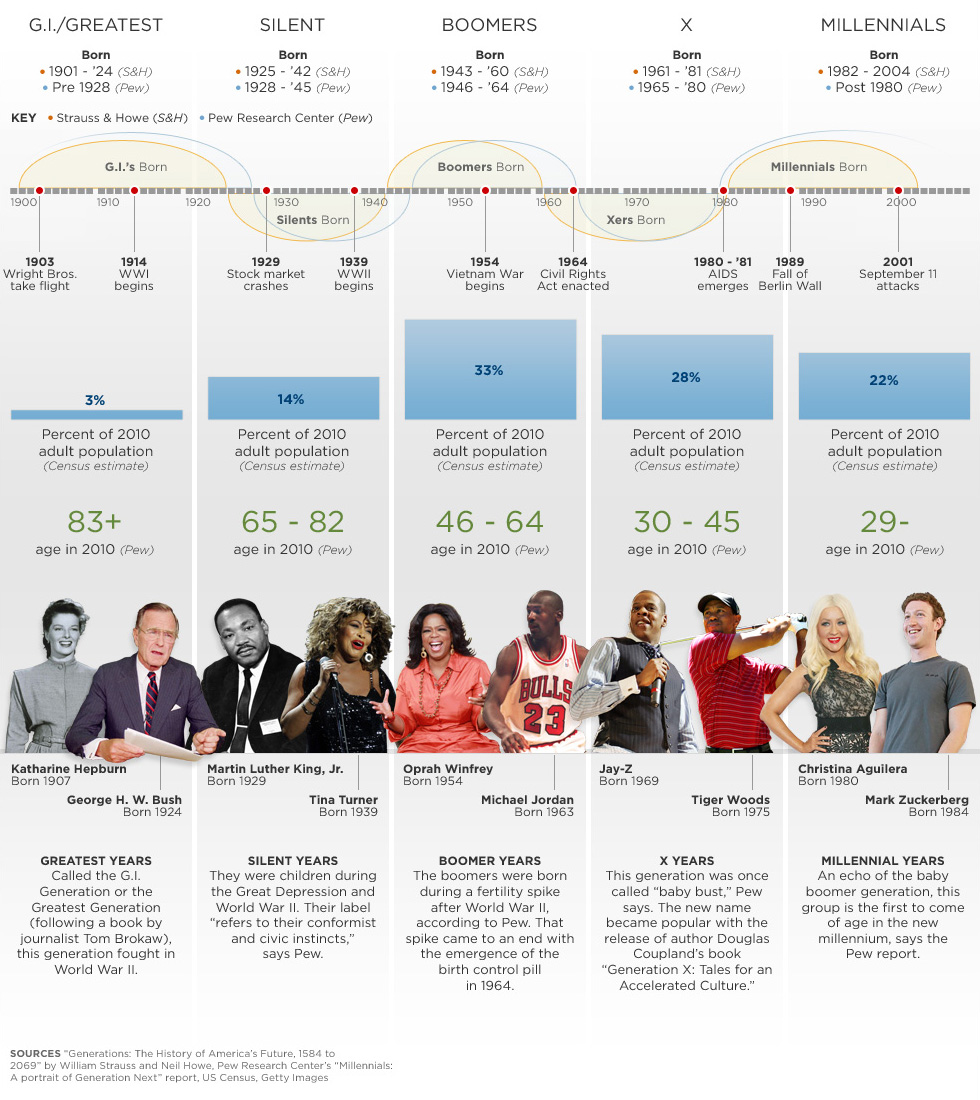
Over the past several months, I have witnessed or been a part of a large number of conversations in which people, often Baby Boomers, lament about "young people." By "young people" they mostly mean everyone under 50, so...at least two generations (X and Millennial) are lumped into that category.

This lament has taken several forms, including but not limited to:

  • young people are entitled, wanting things without working for them.
  • young people are lazy, expecting everything handed to them.
  • young people think they're special, because everyone always got an award.
  • young people are apathetic and don't work for justice.
  • young people don't listen. They think they know everything.
  • young people don't appreciate what we did for them.
  • young people are excluding us. We're still young on the inside!


There have been so many answers to the first several points here, I just don't even think one more blog post is going to matter. So, in short: the economy sucks, the world has changed, and it's no longer possible for most of us to get a job with insurance and a pension and a salary to support a whole family with just a High School diploma or even a Bachelor's degree. We're not lazy, we're working harder than ever just to pay the rent, and putting everything else on the credit card while we pray not to get sick. We're not entitled, we're looking for work that fits in with our two other jobs' schedules. I don't know where you saw everyone getting an award and no scores kept, but that's a fallacy so stop perpetuating it--when we were being noticed at all while you were climbing the career ladder, it was to be taught to play harder and run faster and be better so we could get into the best schools and have the best resumes so we could get a job. Not even a better job than our parents had, just a job, period. We have experienced some of the most competitive and pressure-filled lives, all just to live up to your expectations...only to end up unemployed because *somebody* (ahem) killed the economy and society with their runaway desires and entitlement. (if there are actually younger people, those squarely in the Millennial generation, for instance, who really did grow up with everyone getting an award and no one keeping score, who do you think started that? are you telling me that a whole generation of kids in the most individualistic competitive nation in the world suddenly went all ubuntu on us all by themselves???) And as for the working for justice part: I'm not even going to dignify that with a response beyond this: just because you don't see it doesn't mean it's not happening. It means you're controlling the media and don't want to see.

Now, to the last few points, where I really want to focus.

It's hard to listen when any of the above sentiments infuse nearly every sentence.

And when we're being told that "young people" are untrustworthy by the original purveyors of "never trust anyone over 30."

And when we are told we're lazy entitled worthless blobs by the same people who insist they're 30 on the inside.

It ends up feeling like people who realize they are no longer "young adults" are trying desperately to hold on to those glory days (even while still holding basically all the power and all the money and most of the jobs in our country) . Meanwhile, the rest of us are just supposed to wait in the wings until the two older generations have had their fun, lived their dream, found themselves, and gotten everything just how they like it. (but we'll be called lazy while we wait. and entitled for being upset that what we're left with is minimum wage jobs, crushing debt, broken systems, and a ruined planet.)

Let's be realistic: 50 is not the new 30. 50 is the new 50--as in, those of you who are 50 are making 50 brand new, doing 50 the way no one has ever done it before. You can do that without wishing you were 30. And you can do that without insisting that 30 year olds be the same as you were when you were 30 (or that you wish you were when you were 30). Because you know what? 30 is also a new 30.

And while we're at it: it is good and right for people who are experiencing life in a similar cultural and generational cohort to be together. (this is why the Young Clergy Women Project exists--because being a 20-something clergywoman is a very different experience than being a 50-something clergywoman, even if we were both ordained yesterday.) AND it is good and right to have intergenerational friendships, gatherings, and groups--IF those intergenerational gatherings are not primarily about one generation informing another about how they should be/act/think more like the other. (this is why groups like RevGalBlogPals are so important--because clergy of all ages and experience levels can learn and laugh and cry and pray and dream and work together.)

So here's the deal.
We are grateful for the amazing work done by those who've gone before us. We are grateful for the stories we hear and the doors that are open for us in ways they weren't for others. We want to learn from those who have blazed trails. We see that there is still work to be done, and we see where the battle lines have shifted along the way.
And we also recognize that the world today is strikingly different than it was a generation ago. We have other trails to blaze, because we're solidly along some that others worked on for decades. We have a rapidly changing globalized culture and technological reality that takes serious work to navigate. We can't have the same kind of American Dream that previous generations had, if we can have it at all. We don't use the same social outlets, trust the same institutions, or anticipate the same retirement (or any retirement...even if you have been retired since before I was born, that doesn't mean I'll get that...).

So how about everyone stop with the smugness. Every generation has challenges. Every generation learns things that the next generation ends up not needing to know, and forgets things that will be necessary to survival someday down the road. Every generation has amazing victories and horrifying mistakes that will echo down through the lives of the future. And every generation must see and create change--because if we keep doing the same things the same way, that's insane. Things change. The world has changed and is changing. 

Please: if you hear yourself starting with "we used to...", stop and ask what's changed since you used to do that. If you hear yourself going down the "I'm not old!" road, stop and ask why it bothers you to allow young adults to exist without you among them. Why does it matter so much that you're in a new life stage with all its attendant possibility (and, realistically, power and influence and relative wealth)? In other words: why do you insist that "young people today" need to "grow up/mature" but you don't? And young people: if you feel the eye-roll coming on, squash the urge and instead listen to the stories. 99% of stories contain a nugget that can work its way into the 21st century framework, or a thought that can break open a problem, or an experience that shines light on the next part of the road--IF you listen with the right lens.


PS:
this post probably sounds angry. I've written and deleted it half a dozen times over the last few months, but the conversations I've seen both on news articles and in groups I'm a part of lately pushed me over the edge. I am tired of people refusing to relinquish the adjective "young" even as they trash young adults, all while ignoring some serious economic and cultural realities. So I guess this is my really long way of saying SERIOUSLY, PEOPLE? SERIOUSLY. In my best 80s kid voice: can't we all just get along? Or is it literally impossible for people who wish they were still young to move on without ripping everyone else to shreds? Because that's what's happening here. One generation is building itself up by tearing the next down. just stop it already. (or, as I said in my sermon on Sunday: It is not okay for us to sacrifice one another on any altar. Not even the altar of our own whitewashed memory or the altar of our own self-esteem.)