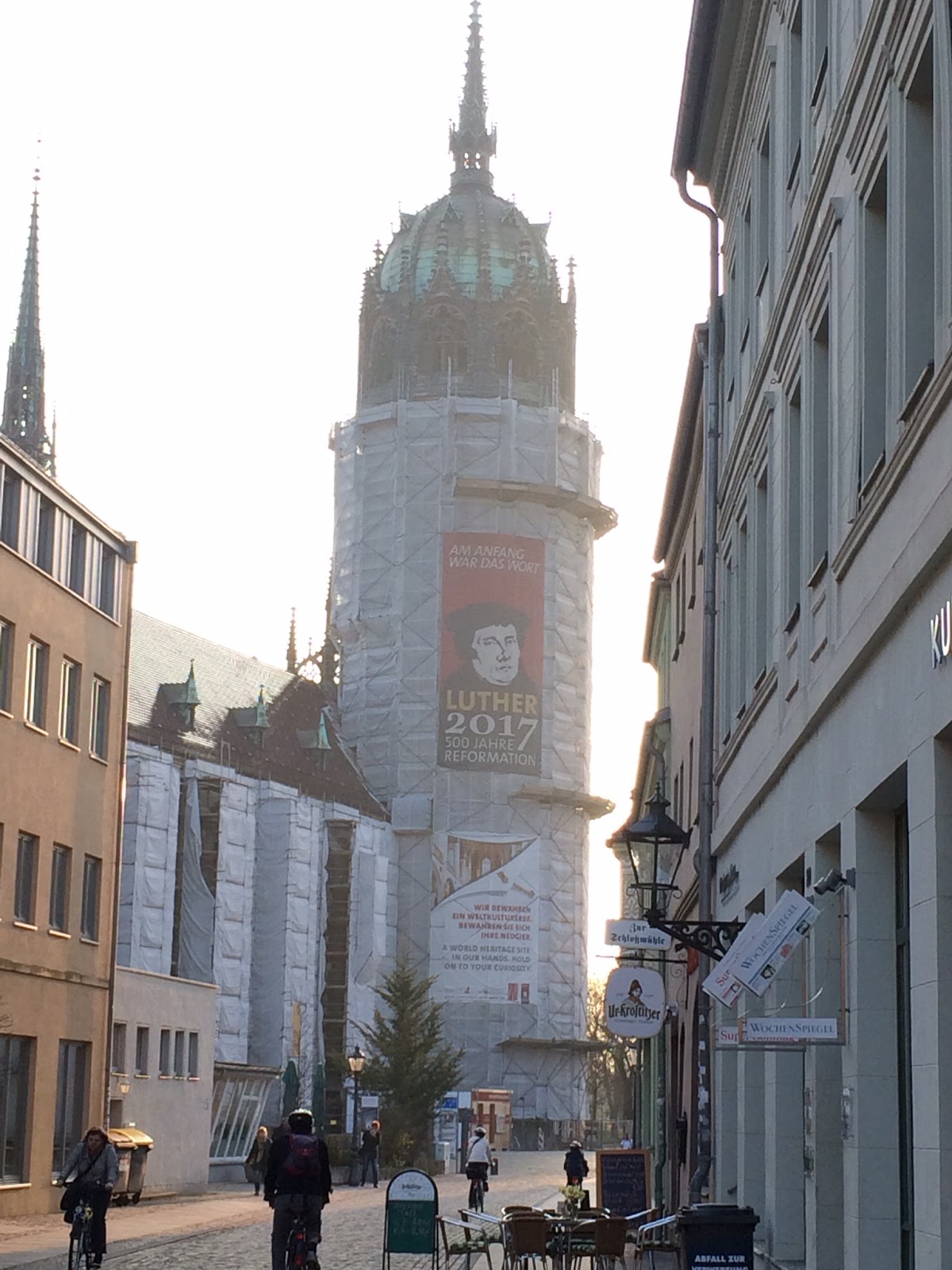
In the 21st of October, 1512, young monk Martin Luther joined the theological faculty of the University of Wittenberg!
It was to be a bit of a tumultuous tenure, as he began teaching through the Bible, and discovering that some of what he had been taught, and some of what was being peddled (literally) by the church of his day was not exactly faithful to the biblical or theological tradition.
Luther taught theology...it was when he was teaching the book of Romans a few years later that he had a significant breakthrough that eventually led him to the actions that we now commemorate as the beginning of the Protestant reformation. (Those actions took place on the 31st of October 1517...just five years and ten days after he took up the post in the theology faculty....and then a mere 489 years after that, I was ordained! Yay reformation!)
I have visited Wittenberg a few times. Aside from the kartoffelhaus—a restaurant where every single one of the hundred + menu items features potatoes!!—the main attractions of the town are the two churches and the Luther house. It’s a fascinating place to visit and I highly recommend it. Not least because Luther moved there on my birthday! Or what would become my birthday, anyway!
(This is the last of this year’s addition to the birthday buddies series!)
Sunday, October 21, 2018
Mirror—a sermon on Nathan, David, Bathsheba, and Uriah
Rev. Teri Peterson
St. John’s Gourock.
Mirror
2 Samuel 11-12
21 October 2018, NL1-7, To See Ourselves 1
Last week, we heard about Joshua and the people joining in God’s covenant, as they settled down in the promised land. After that, there was a period of history when, as it says in the book of Judges, “there was no king in the land, everyone did what was right in their own eyes.” The society began to break down, and some righteous judges and prophets began to speak out—people like Deborah, Gideon, Samson, and eventually Samuel. Then the people asked for a king, despite Samuel’s advice. Through Samuel, God warned the people that choosing a human king rather than submitting to God’s kingship would mean being subject to human flaws, and kings were known to take, oppress, and dehumanise. Nonetheless, they asked, and God sent Samuel to anoint Saul as king. That reign didn’t go particularly well, and Samuel was then sent to anoint one of the sons of Jesse—the youngest, shortest, still-dirty-from-the-fields shepherd boy. It took some time but David eventually grew up, took the throne from Saul, and united the northern and southern tribes into one kingdom. He was a faithful man, for the most part. Today we hear about one of the times when he acted more like the type of king God had warned about, rather than the faithful man of God he was meant to be.
It was springtime, the time of the year when kings lead their armies to war. David sent his army out, led by Joab, but he stayed in Jerusalem. One evening, when his army was in the field without him, David couldn’t sleep, and he got up and went for a walk on the roof of the palace. From there he could see the rooftops of most of the city, where many people slept or bathed, as it was the coolest and most private place in the house. He saw a woman and she was beautiful, so he sent someone to find out about her. The messenger told him her name was Bathsheba, the wife of Uriah the Hittite. Uriah was one of the king’s soldiers, out fighting his war.
David sent messengers to take Bathsheba, and they brought her to him, and he took her. Afterward he sent her home. Later she sent word to say that she was pregnant. David then called Uriah home, under the pretext of asking him for news of the battle. He sent Uriah to his house, but he refused to go home to his wife while his fellow soldiers were still at war, so he slept in the guardhouse. When David realised that Uriah could not be tricked into sleeping with Bathsheba, he sent him back to the front, carrying a new set of secret orders. Those orders included putting Uriah on the front line of a siege, then pulling back so he would be alone, and therefore would be killed in the heat of battle.
We pick up this story today in the Second Book of Samuel, chapter 11, beginning at verse 26 and reading through to chapter 12, verse 9.
When Uriah’s wife heard that her husband was dead, she mourned for him. After the time of mourning was over, David had her brought to his house, and she became his wife and bore him a son. But the thing David had done displeased the Lord.
The Lord sent Nathan to David. When he came to him, he said, ‘There were two men in a certain town, one rich and the other poor. The rich man had a very large number of sheep and cattle, but the poor man had nothing except one little ewe lamb that he had bought. He raised it, and it grew up with him and his children. It shared his food, drank from his cup and even slept in his arms. It was like a daughter to him.
‘Now a traveller came to the rich man, but the rich man refrained from taking one of his own sheep or cattle to prepare a meal for the traveller who had come to him. Instead, he took the ewe lamb that belonged to the poor man and prepared it for the one who had come to him.’
David burned with anger against the man and said to Nathan, ‘As surely as the Lord lives, the man who did this must die! He must pay for that lamb four times over, because he did such a thing and had no pity.’
Then Nathan said to David, ‘You are the man! This is what the Lord, the God of Israel, says: “I anointed you king over Israel, and I delivered you from the hand of Saul. I gave your master’s house to you, and your master’s wives into your arms. I gave you all Israel and Judah. And if all this had been too little, I would have given you even more. Why did you despise the word of the Lord by doing what is evil in his eyes? You struck down Uriah the Hittite with the sword and took his wife to be your own. You killed him with the sword of the Ammonites.
~~~~~~~~
For the past week or two, preachers everywhere who follow the Narrative Lectionary have been agonising about this text. Sometimes it just feels as if the scripture hits a little too close to home, when the news is full of violence against women, bullying in the parliament, world leaders unable to behave like mature adults, violence as a first resort, and a constant stream of hashtags telling stories that used to be kept out of sight, in hopes the problem would be out of mind. Basically, it’s hard to tell whether the daily news or the story of David and Bathsheba is the more disturbing reminder of how little progress the past three thousand years have brought us, at least when it comes to women’s rights.
Back in the days before there was a king, the prophet Samuel had warned the people what kings were like—they see what they want, and they take it. They use violence to achieve their personal desires, with no thought to the consequences to others. They are supposed to be shepherds to the people, but the power inevitably goes to their heads. Now here, just two kings in to the experiment, those words echo with each strike of the sword.
David, who ought to have been out with his army, was instead at home enjoying the luxury of his palace and the peace of a walled city. He saw, he wanted, and he took. And when there turned out to be consequences, he attempted a cover-up. When that failed, he orchestrated an assassination. And he was pretty sure he got away with it. It’s like he knew that whatever happened, he would be recorded as “a man after God’s own heart.” History would be kind to him.
And so it has been. The only hint of the time he managed to break at least 9 of the 10 commandments in one fell swoop is in the first book of Kings, which says “he walked in the ways of the Lord, except in the matter of Uriah the Hittite.” That’s all it says. Just a few words, none of which mention the woman he violated. Aside from them, his reputation is intact, despite his record of coveting, rape, murder, and false witness.
But in those few words is a world of stories, just like there’s a world of pain behind every MeToo hashtag, or every conversation about the possibility of a border in Ireland, or behind the eyes of every person with different skin colour or a different accent, in these days of a “hostile environment for immigration.”
David’s abuse of power is played out again and again, every day. Not just in governments that think nothing of ordering the death of journalists, not even just in the legislative chambers awash in harassment, but all the way down to us.
Listen again to Nathan’s parable: there was a man who had plenty. He had resources, and connections. And there was a man who had very little, just one thing that brought him joy and companionship and hope in the midst of the difficult life he led. A guest arrived at the first man’s house, and rather than use his own resources, he took the one thing the second man had, and used it for his own ends. He offered hospitality without offering of himself. Indeed, his hospitality was actually violence, as he took no thought for the burden his appetite placed on others. He turned aside from the need of his neighbour, and then used him for his own convenience.
The story is an outrage. We, along with David, shout at the injustice of it all.
Then Nathan delivers the devastating blow: you are the man.
You are. I am. We are.
More than once...probably more than once a day, if we’re being truly honest...we are the ones who take. We are the ones who spare no thought for those who bear the burden of our lifestyle. We are the ones who do violence, maybe not directly, but indirectly as we use the resources of others—or worse, other people themselves—for our own gain, our own pleasure. We are the ones whose choices, actions, words, votes, and spending betray our preference for injustice, rather than for God’s kingdom.
You are the man, Nathan says.
Then something amazing happens. In the next part of the chapter that we didn’t read this morning, David heard Nathan’s rebuke, and he recognised its truth, and he confessed. He admitted that he was wrong, and he repented. He named, out loud, his sin against God.
Notice the verbs of this story. Think of how we speak now: we talk of violence against women, and of women who are raped or abused. There is no subject of these phrases, only objects. In the text from 2 Samuel, it says David saw, David desired, David took, David gave orders. He is the subject whose verbs are directed against another human being. He is also the one who hears Nathan’s words, and who examines his own conscience, and confesses his own sin—down to the very end, he is the subject who does active verbs. The entire story is written in a way that tells us he is responsible for his actions, both the ones that displease the Lord and the ones that bring him to a moment of forgiveness.
It would be too much to hope that he would confess his sin against Bathsheba, of course. The experiences of women rarely matter to the story, then as now. I confess that even in this very sermon, when I want to convey that Bathsheba is a human being, created in God’s image, loved by God, and victimised by a powerful man, it is easy to make her only a prop in the man’s story. She is more than a prop, and more than a victim.
And I think that reality, that Bathsheba matters as a person, not a prop— and that Uriah the foreigner matters as a person, not an obstacle— is part of why God sent Nathan to David. Nathan is the one who makes it possible for David’s story to be told the way it is—as a story of action, responsibility, and repentance.
He was David’s friend and confidante, but also an official adviser whose presence at court depended on the king’s pleasure. And he was the one who held up a mirror, so that David could see himself—both what he had become, and what he was meant to be.
Nathan stood up, at some risk to himself, and confronted the king with his own injustice. He stepped in on behalf of those whose voices were silenced. As a man, he spoke to another man, insisting that his treatment of other people was not ok—not with him, and not with God. It wasn’t funny, it wasn’t normal, and it couldn’t be brushed off. He spoke truth to power. Yes, in this case it was to the power of a king, but it could just as easily be to the power of a friendship we don’t want to damage, or a family relationship we need to maintain, or a colleague or boss. We need men to speak up to other men, to refuse to laugh at those jokes, to stop looking the other way, to be Nathans in a world of Davids. And really we all need to be doing that. Whether that’s about women, or immigrants and refugees, or climate change, or people living on the streets, or peace in Northern Ireland, or the scandal of Universal Credit, or the importance of fair trade, or the way our words reflect the image of God planted within us—it matters that we speak up and confront injustice.
David was able to take responsibility for his actions, and therefore able to confess, repent, and be forgiven, because he had someone in his life willing to help him see himself—not just as others saw him, but as God saw him.
We all need a mirror. We can’t be who God made us to be if we can’t see ourselves clearly. And we all need to find the courage to be that mirror for others as well, so that as a community, can see more clearly the body God created us to be.
We are meant to love God with all our heart, soul, mind, and strength, and to love our neighbour as ourselves. God continues to be faithful, continues to forgive, continues to offer us a more excellent way—a way of love that brings healing and hope to all who have the courage to honestly approach the light. It is not an easy calling. But it is the one that God has given us: to speak truth, to see ourselves, to confess our complicity, and to turn toward the way of love, the way of abundant life.
May it be so. Amen.
Saturday, October 20, 2018
On my birthday...in...a lot of years!
I am having so much trouble deciding what event to highlight from October 21 today!
In 1975, Elton John got a star in Hollywood! How cool is that?
In 1520, Magellan and his crew rounded the cape and became the first Europeans to enter the Pacific Ocean! I love the Pacific Ocean...
In 1971, Pablo Neruda won the Nobel Prize for Literature! His poetry is gorgeous and moving.
I think what we can learn from this is that the 21st of October is a most auspicious day, and just like me, there’s too much awesome to be contained!!
#Enneagram7
(We might also surmise that the sermon I am planning to preach on October 21 has a lot going on. Perhaps it could use narrowing down, but it’s all important so what can I possibly leave out???)
Anyway....I know EXACTLY what historical event I’m posting as “on this day” tomorrow, so it’s time to let the clock tick over and turn to celebration! Just as soon as I solve the sermon problem...
In an ongoing birthday buddies series...
In 1975, Elton John got a star in Hollywood! How cool is that?
In 1520, Magellan and his crew rounded the cape and became the first Europeans to enter the Pacific Ocean! I love the Pacific Ocean...
In 1971, Pablo Neruda won the Nobel Prize for Literature! His poetry is gorgeous and moving.
I think what we can learn from this is that the 21st of October is a most auspicious day, and just like me, there’s too much awesome to be contained!!
#Enneagram7
(We might also surmise that the sermon I am planning to preach on October 21 has a lot going on. Perhaps it could use narrowing down, but it’s all important so what can I possibly leave out???)
Anyway....I know EXACTLY what historical event I’m posting as “on this day” tomorrow, so it’s time to let the clock tick over and turn to celebration! Just as soon as I solve the sermon problem...
In an ongoing birthday buddies series...
Friday, October 19, 2018
On my birthday...in 1797!
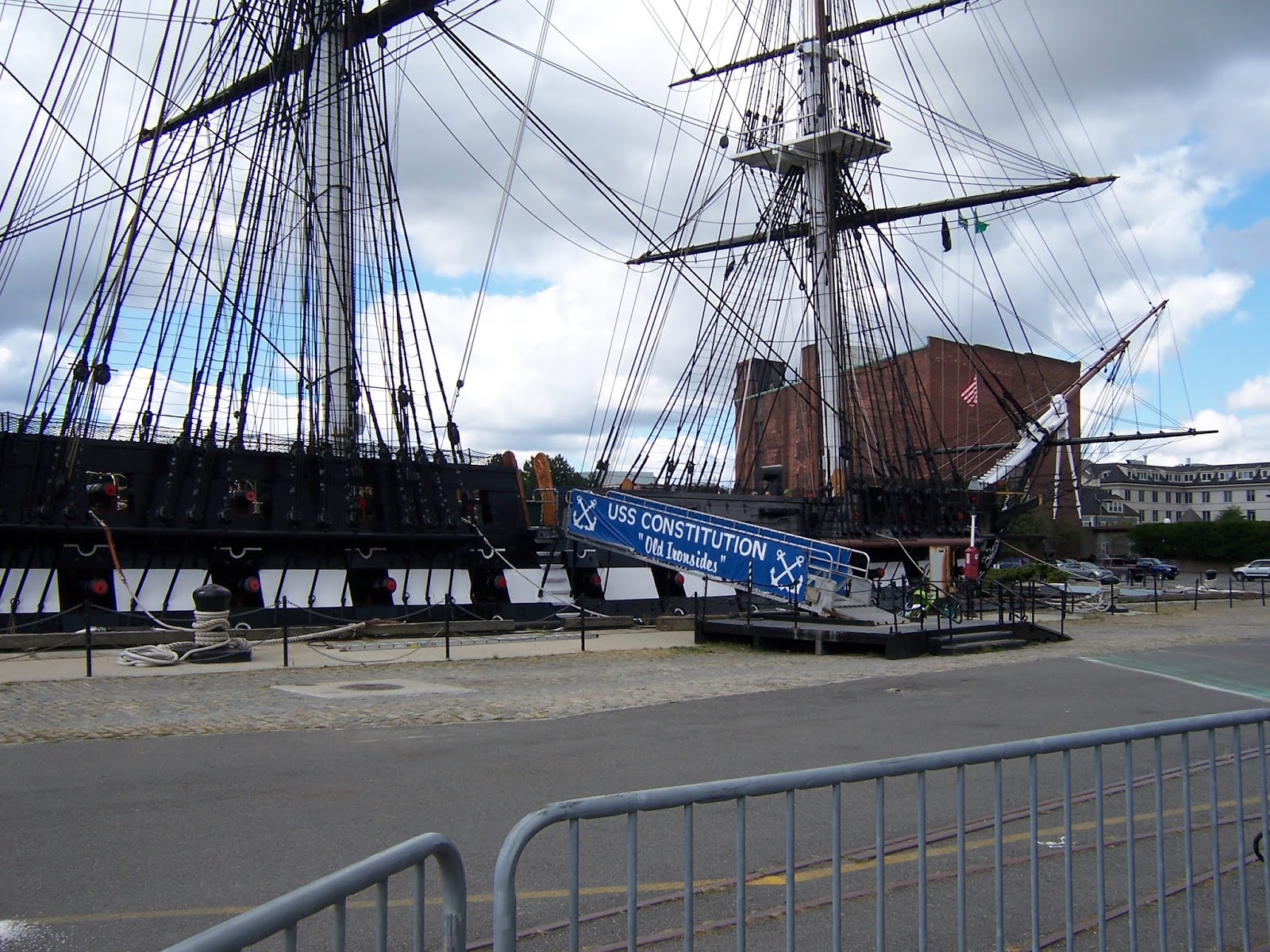
I am a mere 183 years younger than the USS Constitution, often known as “Old Ironsides”!
On the 21st of October, 1797, the third attempt to float the massive warship finally succeeded, and a bottle of Madeira was broken over her bow, and she began the first day of multiple centuries of service in a time when the average lifespan of a warship was 10-15 years.
The design of the frigate was slightly different than those typical of the time, being intentionally thicker and heavier—built to last. And last she has, through multiple wars, training hundreds of navy officers, traveling around the world repeatedly, and now serving as a museum to educate visitors—still with an active duty crew!
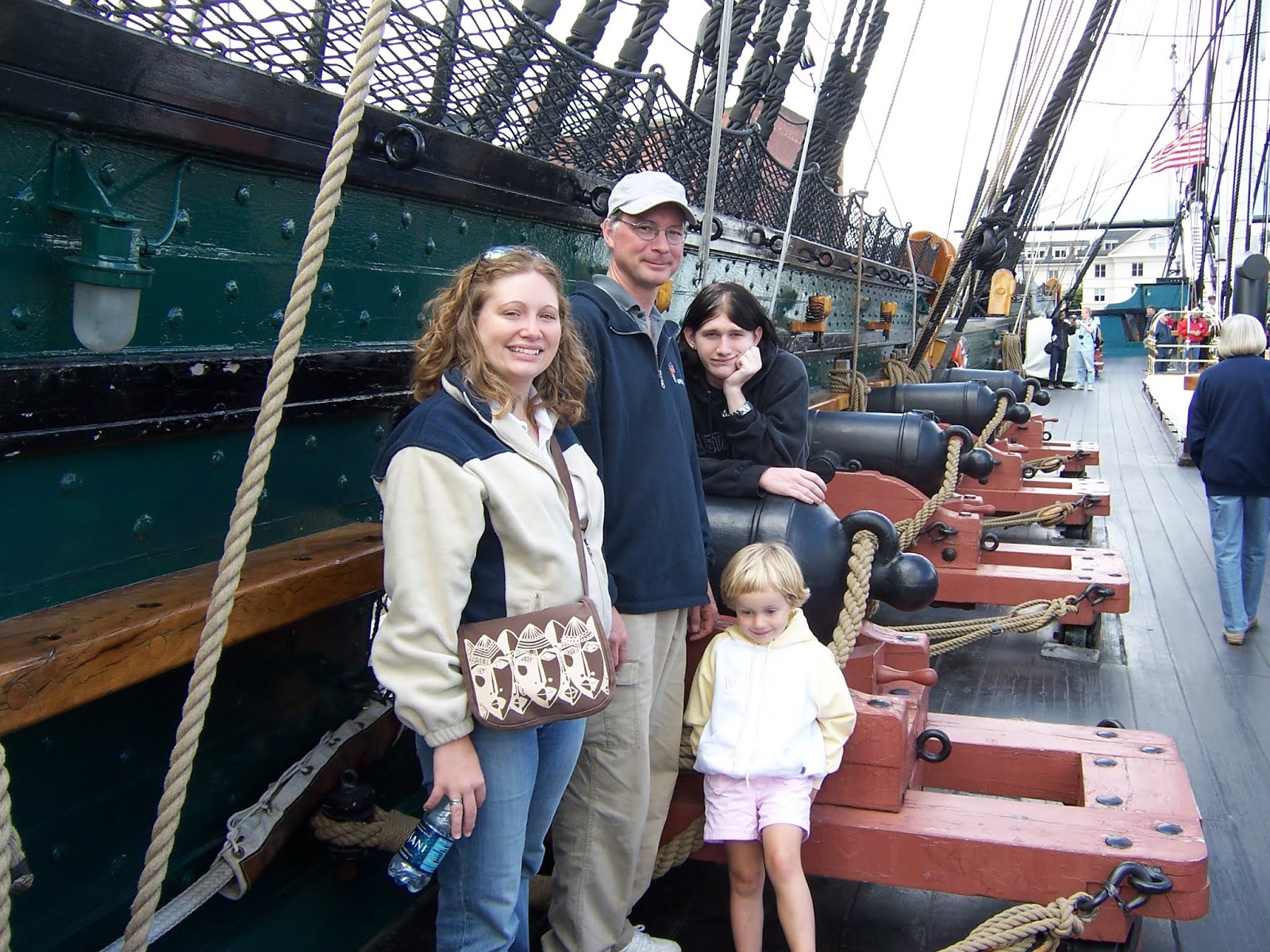
I visited the USS Constitution during my family’s trip to New England in 2006, just before I took my first call as a Presbyterian pastor. During that trip, in fact, I was going to the UPS store every day to fax documents about buying a house. But despite how crazy that was, I still remember many of the cool places we saw on that trip—from lighthouses to Paul Revere’s house to witch’s houses. We sailed in Boston Harbour and I dumped some tea overboard. LOL. And, of course, because dad was with us, we naturally visited the ship. Because no vacation with dad is complete without at least one ship.
Anyway...I love that this ship was launched on my birthday (well, okay, 183 years before my birthday) and that she has so surpassed every expectation. Not least because when I was ordained, the average pastor lasted less than five years in ministry....and I am currently joking-not-joking about serving until my 50th ordination anniversary. There’s something to be said for outliving the average—as long as you can adapt to the changing needs of your context, which Old Ironsides has done very well. Keep up the good work!
(The latest in my new section of the birthday buddies series, leading up to my birthday, just two days away now!)
On the 21st of October, 1797, the third attempt to float the massive warship finally succeeded, and a bottle of Madeira was broken over her bow, and she began the first day of multiple centuries of service in a time when the average lifespan of a warship was 10-15 years.
The design of the frigate was slightly different than those typical of the time, being intentionally thicker and heavier—built to last. And last she has, through multiple wars, training hundreds of navy officers, traveling around the world repeatedly, and now serving as a museum to educate visitors—still with an active duty crew!
Anyway...I love that this ship was launched on my birthday (well, okay, 183 years before my birthday) and that she has so surpassed every expectation. Not least because when I was ordained, the average pastor lasted less than five years in ministry....and I am currently joking-not-joking about serving until my 50th ordination anniversary. There’s something to be said for outliving the average—as long as you can adapt to the changing needs of your context, which Old Ironsides has done very well. Keep up the good work!
(The latest in my new section of the birthday buddies series, leading up to my birthday, just two days away now!)
Labels:
birthday buddies,
dad,
it's all about me,
photos,
travel,
vacation
Thursday, October 18, 2018
On my birthday...in 1959
(A new addition to my “birthday buddies” series, inspired by round six of the Spinny quiz, which is always “on this day”)
The 21st of October, 1959 was a monumental day. Not only because my mother was one year and two months old on that day, but also because it was the day that the Guggenheim Museum, designed by Frank Lloyd Wright, opened in New York City!
The Guggenheim is an incredible museum, and a beautiful piece of work in its own right. All curves, no traditional rectangular galleries, a curving ramp that takes you past every piece with no possibility of getting lost in a maze of painting...it’s gorgeous.
It was, of course, like apparently everything that happened on my birthday, controversial. But the main reason for the controversy was so fascinating: people thought the building would compete with the artwork inside! They said the structure wasn’t fit for purpose, because it was too beautiful and too unconventional. !!!!!
The museum it was designed to house was literally called “the museum of non-objective painting.” The person who commissioned Wright to do it said she wanted “A Temple of the Spirit!”
Despite the mixed reviews from contemporary artists and architects who had difficulty seeing the vision, the museum is now one of the most iconic buildings and art spaces anywhere in the world. That day in 1959 was a triumph for vision that makes new things possible. Happy birthday, Guggenheim Museum!
(I can’t find my own photos from there...it’s possible I was busy looking at everything and not taking pictures, or that they are only print and not digital and therefore I don’t have them anymore, so I’m using google to show you all how amazing it is!)
The 21st of October, 1959 was a monumental day. Not only because my mother was one year and two months old on that day, but also because it was the day that the Guggenheim Museum, designed by Frank Lloyd Wright, opened in New York City!
![]() |
| Photo from FrankLloydWright.org |
The Guggenheim is an incredible museum, and a beautiful piece of work in its own right. All curves, no traditional rectangular galleries, a curving ramp that takes you past every piece with no possibility of getting lost in a maze of painting...it’s gorgeous.
It was, of course, like apparently everything that happened on my birthday, controversial. But the main reason for the controversy was so fascinating: people thought the building would compete with the artwork inside! They said the structure wasn’t fit for purpose, because it was too beautiful and too unconventional. !!!!!
The museum it was designed to house was literally called “the museum of non-objective painting.” The person who commissioned Wright to do it said she wanted “A Temple of the Spirit!”
Despite the mixed reviews from contemporary artists and architects who had difficulty seeing the vision, the museum is now one of the most iconic buildings and art spaces anywhere in the world. That day in 1959 was a triumph for vision that makes new things possible. Happy birthday, Guggenheim Museum!
(I can’t find my own photos from there...it’s possible I was busy looking at everything and not taking pictures, or that they are only print and not digital and therefore I don’t have them anymore, so I’m using google to show you all how amazing it is!)
![]() |
| https://goo.gl/images/gkVvkw |
Wednesday, October 17, 2018
On my birthday....in 1805
continuing with my new series leading up to my birthday (piggy backing on my Birthday Buddies series a few years ago)
I was born on the 175th anniversary of the Battle of Trafalgar—the naval battle that shaped Britain for generations. Or centuries, even, if you count things like Trafalgar Square in London, or Regents Bridge in Edinburgh, which are dedicated to the battle and indeed the man who won it, at the cost of his own life, Admiral Horatio Nelson.
I confess that growing up in the USA I knew precisely nothing whatsoever about the Battle of Trafalgar. I mean...I knew that Britain had a navy, obviously. I knew about the existence of Napoleon and that there were long decades of war related to his quest for territory and power. That pretty much sums up my knowledge of an event that is still known as the “most important naval battle in British history.” Apparently the 21st of October is even designated “Trafalgar Day.” Who knew? (Well...probably British people. But not me, until today.)
I have seen Admiral Nelson’s uniform in the museum at Greenwich, and marveled at the visible bullet hole (with clean edges too) in the shoulder. Most of what I know about the battle (still hardly anything) I learned in that museum.
But the reason I decided to feature this event in my birthday blog? Because the REASON it was such a victory is because Nelson went against the traditional form of naval battles, structuring his fleet in a completely different way from the way it had always been done before. Even though he was technically outnumbered, and faced a fleet with at least some of the ships being of superior quality, his choice of non-traditional tactics and structure made him the winner of the day. (Except for the dying part, obvs.)
So of course I would choose a day of unorthodox strategy leading to victory to celebrate! :-) I think that deserves a statue at the top of a huge column in the middle of a busy square in London, don’t you?
I was born on the 175th anniversary of the Battle of Trafalgar—the naval battle that shaped Britain for generations. Or centuries, even, if you count things like Trafalgar Square in London, or Regents Bridge in Edinburgh, which are dedicated to the battle and indeed the man who won it, at the cost of his own life, Admiral Horatio Nelson.
I confess that growing up in the USA I knew precisely nothing whatsoever about the Battle of Trafalgar. I mean...I knew that Britain had a navy, obviously. I knew about the existence of Napoleon and that there were long decades of war related to his quest for territory and power. That pretty much sums up my knowledge of an event that is still known as the “most important naval battle in British history.” Apparently the 21st of October is even designated “Trafalgar Day.” Who knew? (Well...probably British people. But not me, until today.)
I have seen Admiral Nelson’s uniform in the museum at Greenwich, and marveled at the visible bullet hole (with clean edges too) in the shoulder. Most of what I know about the battle (still hardly anything) I learned in that museum.
But the reason I decided to feature this event in my birthday blog? Because the REASON it was such a victory is because Nelson went against the traditional form of naval battles, structuring his fleet in a completely different way from the way it had always been done before. Even though he was technically outnumbered, and faced a fleet with at least some of the ships being of superior quality, his choice of non-traditional tactics and structure made him the winner of the day. (Except for the dying part, obvs.)
So of course I would choose a day of unorthodox strategy leading to victory to celebrate! :-) I think that deserves a statue at the top of a huge column in the middle of a busy square in London, don’t you?
Tuesday, October 16, 2018
On my birthday....in 1964
Many weeks I spend my Thursday evening at my local pub, which has a quiz on Thursdays. Round 6 of the quiz is “on this day”...so I thought I’d borrow that for a little birthday series!
A few years ago I did a series leading up to my birthday, featuring some of the cool people I share October 21st with. This time, it’s exciting events to share the day with!
So, in no particular order, for the week leading up to my birthday...
October 21st, 1964: the film version of My Fair Lady premiered! That’s right, I was born on the 16th anniversary of the first time Audrey Hepburn sang “Wouldn’t it be loverly” on the big screen. Or rather, sang it but then had her voice removed and dubbed over. It was a controversy to cast her rather than Julie Andrews (who played Eliza in the Broadway and West End productions), but what would my birthday be without a little controversy? The ending of the musical provides more controversy too, as sometimes the stage productions differ from the movie, both of which differ from the original story...who knows how Eliza would really have ended it???
My Fair Lady is a delightful musical, and it’s fun to think I was born on the day the movie version was first seen!
A few years ago I did a series leading up to my birthday, featuring some of the cool people I share October 21st with. This time, it’s exciting events to share the day with!
So, in no particular order, for the week leading up to my birthday...
October 21st, 1964: the film version of My Fair Lady premiered! That’s right, I was born on the 16th anniversary of the first time Audrey Hepburn sang “Wouldn’t it be loverly” on the big screen. Or rather, sang it but then had her voice removed and dubbed over. It was a controversy to cast her rather than Julie Andrews (who played Eliza in the Broadway and West End productions), but what would my birthday be without a little controversy? The ending of the musical provides more controversy too, as sometimes the stage productions differ from the movie, both of which differ from the original story...who knows how Eliza would really have ended it???
My Fair Lady is a delightful musical, and it’s fun to think I was born on the day the movie version was first seen!
Sunday, October 07, 2018
Direction—a sermon on the Ten commandments
Rev. Teri Peterson
St. John’s
Direction
Exodus 19:3-8; 20:1-17 (NIV)
7 October 2018, NL1-5, Forward in Faith 5
Then Moses went up to God, and the Lord called to him from the mountain and said, ‘This is what you are to say to the descendants of Jacob and what you are to tell the people of Israel: “You yourselves have seen what I did to Egypt, and how I carried you on eagles’ wings and brought you to myself. Now if you obey me fully and keep my covenant, then out of all nations you will be my treasured possession. Although the whole earth is mine, you will be for me a kingdom of priests and a holy nation.” These are the words you are to speak to the Israelites.’
So Moses went back and summoned the elders of the people and set before them all the words the Lord had commanded him to speak. The people all responded together, ‘We will do everything the Lord has said.’ So Moses brought their answer back to the Lord.
And God spoke all these words:
‘I am the Lord your God, who brought you out of Egypt, out of the land of slavery.
‘You shall have no other gods before me.
‘You shall not make for yourself an image in the form of anything in heaven above or on the earth beneath or in the waters below. You shall not bow down to them or worship them; for I, the Lord your God, am a jealous God, punishing the children for the sin of the parents to the third and fourth generation of those who hate me, but showing love to a thousand generations of those who love me and keep my commandments.
‘You shall not misuse the name of the Lord your God, for the Lord will not hold anyone guiltless who misuses his name.
‘Remember the Sabbath day by keeping it holy. Six days you shall labour and do all your work, but the seventh day is a sabbath to the Lord your God. On it you shall not do any work, neither you, nor your son or daughter, nor your male or female servant, nor your animals, nor any foreigner residing in your towns. For in six days the Lord made the heavens and the earth, the sea, and all that is in them, but he rested on the seventh day. Therefore the Lord blessed the Sabbath day and made it holy.
‘Honour your father and your mother, so that you may live long in the land the Lord your God is giving you.
‘You shall not murder.
‘You shall not commit adultery.
‘You shall not steal.
‘You shall not give false testimony against your neighbour.
‘You shall not covet your neighbour’s house. You shall not covet your neighbour’s wife, or his male or female servant, his ox or donkey, or anything that belongs to your neighbour.’
~~~~~~~
This past week was the 62nd anniversary of the premiere of the film The Ten Commandments, starring Charlton Heston as Moses. There was a period when that was all some people knew about the story—they couldn’t name the commandments, exactly, but they had an image of Moses and of God that came from the movie. Today, I suspect the average person has even less to go on, as the movie hasn’t held up very well, not to mention that it takes some fairly significant liberties with the story of God and God’s people, leaving both in a fairly unflattering light.
We have been prone to thinking of the Commandments as a list of rules that have to be followed in order to be good enough for God. Since so many of them are phrased in the negative—thou shalt not—we end up with an image of an angry God who spoils all our fun and has nothing but “no” to say to us. The movie doesn’t help, as it makes God sound like a bitter old man just waiting to be disappointed by people who can never live up to his expectations.
But the story itself, if we read it carefully, has none of that at all. In fact, it’s quite the opposite.
God heard the cries of the Israelites when they were enslaved...God saw the injustice there, and rescued them from it. And not just took them out of the situation, but made it impossible for their oppressors to do it to anyone else, either. God has been leading them, day and night, as a pillar of fire and cloud. God feeds them every day with manna and quail, God gave them water to drink even in the middle of the desert, and God spoke face to face with Moses and taught him how to be their leader. For all their faults and confusion and whining, the Israelites have one of the most up-close-and-personal experiences of God that anyone could ever ask for.
And now, as they stand at the foot of Mount Sinai, God reminds them of their true destination. Notice that it doesn’t say “I brought you out of Egypt and into the Promised Land.” We always think that was the destination—that they were being moved, albeit very slowly—from one place to another. But in fact the destination of the exodus was never about the geographic location. God reminds the people that the destination of their journey out of slavery is “to me.” “I carried you on eagles’ wings and brought you to myself,” says God.
This is really the whole of the story we read in the Bible, from “in the beginning” to “amen” and even continuing on to today. God is constantly bringing us toward God. That is always the goal, the end point—not a place, but a relationship. Not a physical space, however much we might love our buildings and our locations. God is interested in literally being with us, wherever we find ourselves on the earth, and so God is continually moving us closer and closer. Out of darkness, into light. Out of isolation, into community. Out of despair, into hope. Out of fear, into faith. From the moment when God created us in the divine image, through the prophets, and most perfectly in Christ—as Paul writes, “in Christ God was reconciling the world to Godself.” Bringing us close, again and again.
This movement God makes doesn’t depend on us, either. Notice that the people were brought out of Egypt, to God, long before God asks anything of them. And before God speaks any commands, the people join in the conversation and commit to a partnership with God, working together to create the new reality that God has shown them. The vision is so compelling—a vision of ongoing relationship, of being treasured by the One who created all things and is over all the earth—that even before the people have seen the map, they sign up for the journey. Because though they do not know what place they are going toward, they know who they are going with, and that is enough for them to go forward in faith.
This doesn’t sound like a story of an angry God shouting his disappointment at people. I’m not really sure why that is always the image we seem to create, when the story really shows us a God who loves us so much that we are constantly being brought closer and closer, even—or maybe especially—when we have behaved in ways that cause God pain. God was even willing to become one of us, to suffer with us, to bring us into a closer relationship that changes how we live.
That is, I think, what the commandments are for. They show us the direction we are meant to go, as we continue to be a community in relationship with God. Because we are a people already called out, our way of life is different. The commandments created a people who were visibly different from those around them, a community that organised its life together in a particular way, a way that was often at odds with the usual economic, political, and cultural systems of the world. Not so they could earn God’s favour, but because they had already experienced it and so they lived differently.
Remember God’s promise to Abraham? That we would be blessed in order to be a blessing. That’s the direction the commandments point as well. When we follow that map, we also demonstrate to the world a visibly different way of life that offers direction to others who long for this relationship, this covenant community where we work together with God to create a new world.
A world where we don’t have to be fractured and compartmentalised, with different loyalties for each day of the week and each aspect of our lives—we can organise every sphere of our lives around one loyalty, to our One God.
A world where we don’t have to exploit, or misuse, or distort reality for our personal gain, or allow our acquisitive desires to direct our behaviour—instead we are free to work for the flourishing of all, to stand up in opposition to those who would try to exploit, distort, and oppress, and to care for those the world sets aside, ensuring labourers and immigrants and the poor and the elderly and the young are treated justly.
A world where people see and remember to whom we all truly belong.
I think one of the most fascinating things about this story, and something we would usually not notice because of how the regular lectionary divides up scripture, is that the Israelites agree to join this covenant before they know what the terms are really going to be. They have enough of a relationship with God that they are ready to follow God’s will, to walk and live God’s way, before they actually know what that is going to entail. All they know is that the direction of God’s liberation is always “to myself,” and that so far their experience of God has been unending faithfulness. That is enough for them to give their assent, even when the specifics of what God wants them to do next are still unspoken.
That is truly going forward in faith—trusting the relationship we already have with God so we are willing to do whatever it takes to keep going that direction, even when we don’t yet know exactly what God is going to ask of us. I think most of the time we pray for God’s guidance, and we ask for God to reveal the way, and we say we are willing to follow God’s will....but only if we already know what it is. Until we see the map, we’re not going anywhere. But this story suggests that a large part of getting to know God’s will is already being willing to do it even before we have seen it. Because it is only after the people have said “we will do it” that they hear the description of what their community is going to look like going forward.
I wonder if there is still a lesson there for us, as a church, and as the Church of Scotland. I suspect that when we as a Church decide to go forward in faith rather than fear, the way will become clear. I don’t know what way that will be, but I do know it will be designed for God’s glory, it will lead us into ever deeper relationship, and it will demonstrate the kingdom of God, a kingdom of abundance and grace, to a world that desperately needs good news. Not good news linked to a particular location or building, but to a particular God, who is always bringing us to themself.
May it be so. Amen.
Sunday, September 30, 2018
Thirst—a sermon on Exodus 17
Rev. Teri Peterson
St. John’s
Thirst
Exodus 17.1-7 (CEB)
30 September 2018, Forward in Faith 4
The whole Israelite community broke camp and set out from the Sin desert to continue their journey, as the Lord commanded. They set up their camp at Rephidim, but there was no water for the people to drink. The people argued with Moses and said, “Give us water to drink.”
Moses said to them, “Why are you arguing with me? Why are you testing the Lord?”
But the people were very thirsty for water there, and they complained to Moses, “Why did you bring us out of Egypt to kill us, our children, and our livestock with thirst?”
So Moses cried out to the Lord, “What should I do with this people? They are getting ready to stone me.”
The Lord said to Moses, “Go on ahead of the people, and take some of Israel’s elders with you. Take in your hand the shepherd’s rod that you used to strike the Nile River, and go. I’ll be standing there in front of you on the rock at Horeb. Hit the rock. Water will come out of it, and the people will be able to drink.” Moses did so while Israel’s elders watched. He called the place Massah and Meribah, because the Israelites argued with and tested the Lord, asking, “Is the Lord really with us or not?”
~~~~~
The Israelites aren’t having a very easy time of it, are they? Things weren’t going very well in Egypt, despite their short memories on that front. They saw God do amazing wonders, and rescue them from slavery, and bring them through the sea and out to freedom. But once they were out of Egypt and into the wilderness of the Sinai peninsula, some problems arose. It must have felt like they were just muddling along as best they could, traveling, making camp, trying to keep track of children and herds and friends, while also not getting too exhausted for the journey or too overwhelmed to cope with it all. It’s no wonder they seemed prone to complaining, and to wondering at every turn if God was still there. They were led by the pillar of cloud and fire, showing them the way, protecting them from danger. They had been fed manna and quail. But every day was a new challenge to overcome, a new drama to face.
And so they turn to Moses, looking for help, voicing their concerns. But Moses, too, is tired, and overwhelmed. He might be a little bit hangry, too, from the looks of things—his first response to this mass of thirsty people crying out for water is “why are you arguing with me????” What do they want him to do? After all, he’s just a person like they are. Yes, he’s the leader, and yes, God speaks to him, but surely he doesn’t have to be the only one who does everything, right?
His deflection doesn’t work, though, and Moses is beginning to feel as desperate as the rest of the people are. Only then, when he feels his own life is in danger, does he finally turn to God again.
I think God’s response is fascinating and lovely. Moses says “help! They’re going to stone me!” And God does nothing with that at all. Instead of answering Moses’ cry for personal safety, God addresses the thirst of the Israelites. God recognises this is a real problem, the people need to be provided for. People need the nourishment of a cup of cool water in the desert. Their complaint is valid, their cry is heard.
And so God reminds Moses who he is: “take your shepherd’s staff and go ahead of the people” God says. Like a shepherd, be a leader. Remember, sheep follow, they can’t be herded from behind. So the leader goes ahead, taking some elders with him, and the people will follow. With that sign of his pastoral identity and purpose, Moses strikes the rock, the elders see the salvation of the people flowing out, and everyone is able to drink and be satisfied—and so they have an answer to their question: is the Lord among us, or not? Yes, and God not only sees them for who they really are and what they really need, God provides for those needs even when the leader is more worried about saving his own skin.
Often, preachers and writers ask us to imagine ourselves as the Israelites—to identify with the people who are overwhelmed and wonder where God is, the ones who ask for help and God responds in really tangible ways. We are indeed sometimes forgetful, sometimes overwhelmed, sometimes thirsty, sometimes demanding, sometimes questioning. That’s true. I don’t think it’s the whole story, though.
What if instead we imagine the community outside the church, the people who are not a part of the congregation, as the Israelites? All those people out there in our neighbourhoods, on the train and in the cafe and in the bowling club and the pub and the shops and at school and everywhere. The world is full of pressures, people are anxious and overwhelmed, just getting along day by day, some feeling overly full and some empty and many seeking something but not sure what. Some sense it and don’t know what questions to ask or where to turn for help, and others try to fill the void in different ways (some healthier than others), but ultimately what it comes down to is that people are thirsty.
Now imagine how often people encounter the Church as if we are Moses. They hear the Church saying it can’t be questioned, and that doubting God is sinful. They come looking for nourishment, and the Church gives them our frustration and fear right back. They long for water, and the Church gives rules and blames them for their own predicament and then asks them to join and give so we can save ourselves.
If we’re lucky and people hold on until we get around to the next part of the story, we might get a chance to lead by example, to go out ahead with the shepherd’s staff, to witness a miracle and share the good news with those who come along with us. We might get the chance to be reminded by God that God’s care is for all the people, not just for us and our institutions and plans and rules. Hopefully we, like Moses, would take the opportunity to turn our faces away from our own self-preservation and toward the future and step out in faith, and then shout out the good news of what God has done.
I would like to make another suggestion.
People are indeed thirsty. Life in the modern world is complicated. Only a few minutes looking at the news headlines is enough to have even faithful people asking “is God among us or not?” For those who long for just a taste of living water, with only desert in sight, it can seem bleak.
What if the Church is meant to be like the rock? Split open, gushing forth streams of living water, enough to quench the thirst of all.
The rock doesn’t ask why people are thirsty. It doesn’t ask where they’ve been all this time. It doesn’t blame them for being in the wilderness, or for not knowing what to do. It feels the strike of the shepherd’s staff, and it breaks itself open and offers itself. And people find that even in this strange place, there is a taste of hope, a drop of love poured out just for them. The rock doesn’t get anything out of it, the people don’t become rocks or anything...it’s a selfless act of emptying itself for the sake of others, so that they may have life, and have it abundantly.
The world is literally dying of thirst, longing to know the answer to the question: is the Lord among us or not? What would it look like for the Church, the Body of Christ, to understand itself as the rock that feels the tap of its shepherd, and then opens up and simply serves the need of those around it, without hope for its own gain? It might look like literally working for clean water and food for all. It might look like offering spiritual nourishment in new ways, even for people who will never join the church. It might look like reaching out to be a friend to those who are lonely, or passing on skills we have that others can use, or giving of our time or resources to work for justice in our community and nation and world. It will look like going forward in faith, reaching out, not simply waiting for people to come to us in the manner we’re used to. It will certainly involve prayer, and listening for the nudge of the Spirit, and courage to break ourselves open and let love pour through in whatever form people need to experience grace.
Jesus promised that we would become a well of living water, springing up with eternal life. Can we hear the thirst of our neighbours, and open ourselves up to meet it?
May it be so.
Amen.
Subscribe to:
Posts (Atom)