I have had a number of conversations lately that really drive home how different the historical and cultural context in which I now life is from my previous life experience.
Today I visited a woman who talked for an hour about the 21 boys she used to play football (soccer) with as a child, and how many of them didn't come home...and about her husband and the nightmares he had...and about a cousin who was killed during an air raid on his training camp...and about the many American soldiers she met when her mother took them in during their leave. She spoke of how she was just a teenager then, only 13 when the war broke out, and she naively thought there could never be another one like it.
I have sat in the living rooms of women who were evacuated to the countryside when they were children, and one whose family took in child evacuees. And I have sat by the bedsides of women who never married because a generation of men was lost. And I have sat around the table with women whose husbands never spoke of what they'd seen, or who felt an immense sense of unearned luck because all their brothers came home when so many didn't.
A lot of my time these days is spent with women in their 80s and 90s. These are women who lived through World War II--who bore the brunt of the reality of war both in terms of the cost at home (family lost, rationing, women in the workforce in new ways, etc) and in terms of the long-term cost of lives forever changed.
The stories are incredible--of bombs bursting in the garden, of rationing that extended well after the war was over because of the immense national cost of rebuilding, of large gaps between siblings because one parent was away at war, of sweethearts lost and found, of letters exchanged and news reports anxiously read.
Perhaps unsurprisingly, these are people who feel abject horror at what happened in Charlottesville last weekend. They cannot fathom that Nazis marched through the streets, or that white supremacy is an acceptable ideology.
This is not to say there is no racism in Scotland, of course. But it is to say that people who lived through the Nazis the first time, who sacrificed far more than most of us who are from North America experienced (including those who gave significantly to the war effort, once we got over enough of our own white nationalism to enter the war), cannot understand how on earth it is possible that Nazism rises again, unchecked, or even encouraged by those in power.
Today's conversation included the casual observation that the woman's husband, at age 19, had been issued a revolver with only a couple rounds of ammunition. It's purpose was to use on himself, should his plane come down behind enemy lines.
Imagine being 19 years old and given those instructions, then put into a plane with rockets, a pop gun, and a map, and told to go up just 250 feet because any higher would make their bombs less accurate.
Now imagine being that person, or their family, and seeing the images from Charlottesville.
One of many things I am enjoying about living here is the sense of freedom to speak truth even when it might be politically unpopular. I don't know if that will always be the case, but in this moment at least, no one bats an eye when I say white supremacy and Nazism is antithetical to the gospel. I have been in churches where that would be a controversial statement...and that is, frankly, an abomination. There should be no room for Nazi sympathizing. If there are people who disagree, then what they need to hear is not something that they can construe to agree with them--they need to hear the hard good news that brings them to confession and repentance. Period.
If they won't listen to Jesus, maybe they'll listen to the stories of these amazing women I've sat with over the past several weeks, and be reminded that hate does not win. It cannot win. And it cannot be allowed to even try.
***Yes, I'm aware that there's plenty of racism and xenophobia to go around. See: colonialism, Brexit, Grenfell, etc. And yet many of these women have spoken to me about those things as well, fully aware and concerned that people don't remember what they fought for. And also, honestly, racism is different here. Not better or worse necessarily, just different. Because history is different. The context of the World Wars, and of slavery, is different across the ocean....
Showing posts with label tragedy. Show all posts
Showing posts with label tragedy. Show all posts
Wednesday, August 16, 2017


Saturday, July 09, 2016
psalms--prayers for everything
We are reading the Bible in 90 Days at church this summer. Yesterday's assignment was Psalms 46-69...and about halfway through I realized that I was feeling like these psalms are not mine to pray.
I always tell people--and I told people in class just a couple of days ago--that the psalms give us language for anything. We find praise and lament, anger and sadness and fear and joy, all directed toward God in prayer and song. We ought to read them as if we are praying them ourselves, and see how it feels to talk to God in all these different moods.
In that class, we also talked about "enemies"--because so few of us (in our mostly white, mostly middle class, suburban church) have "enemies" in the traditional sense, we talked about how we are often our own worst enemy, and that enemies don't always look like someone chasing us with weapons or plotting our downfall and destruction.
And then I was reading Psalm 54: "the proud have come up against me, violent people want me dead."
And Psalm 55: "My heart pounds in my chest because death's terrors have reached me. Fear and trembling have come upon me; I'm shaking all over. I say to myself, I wish I had wings like a dove! I'd fly away and rest."
Psalm 56: "You yourself have kept track of my misery. Put my tears into your bottle--aren't they on your scroll already?"
57: "My life is in the middle of a pack of lions. I lie down among those who devour humans. Their teeth are spears and arrows, their tongues are sharpened swords."
59: "Powerful people are attacking me, Lord, but not because of any error or sin of mine. They run and take their stand--but not because of any fault of mine. ... they come back every evening... don't kill them, or my people might forget... for the sin of their mouths, the words they speak, let them be captured in their pride."
These are not my words to pray. Not today. Maybe not ever, really, but particularly not today. These words belong to Diamond Reynolds. They belong to Alton Sterling's mother. They belong to the families of responsible and good police officers in Dallas. They belong to the families of Trayvon and Michael and Freddie and Eric and Sandra and Clementa and hundreds more. They belong to the parents who are teaching their children how to survive by speaking softly and deferentially, never running, always having their hands visible, double checking their cars and their clothes before leaving the house to be sure nothing could be misconstrued....and then who quake with fear until they come home again.
Too many people in our nation are LIVING these prayers. This is their reality. They are surrounded, and there is no escape. Words are used to dehumanize before the body is done bleeding out on the ground. The error they committed was being born with the wrong color skin. Fear is a daily experience. If only they could do what so many of us do--turn it off for a little while, choose not to think about it, get some rest from the weary days of defending their existence.
I cannot pray these prayers today. What I can do, though, is hear the anguish of my fellow human beings as they cry out. Through these ancient words, their voices ring with pain and fear and anger. I can read these psalms, and know that my neighbors are praying them fervently, with far more urgency than I will ever know.
And then I can listen when God calls me to be an answer to prayer. I can remember, and speak their names, I can stand up and speak out when I see and hear injustice, I can be a voice of grace, I can create space for truth and refuse to repeat rumor, I can put aside my own pride and my own need to be right in order to honor the experience of others, I can be a peacemaker and not only a peacelover. I can be part of the solution, so that one day my neighbors don't need these prayers anymore, except to combat their own internal enemies.
May it be so, Lord...may it be so.
I always tell people--and I told people in class just a couple of days ago--that the psalms give us language for anything. We find praise and lament, anger and sadness and fear and joy, all directed toward God in prayer and song. We ought to read them as if we are praying them ourselves, and see how it feels to talk to God in all these different moods.
In that class, we also talked about "enemies"--because so few of us (in our mostly white, mostly middle class, suburban church) have "enemies" in the traditional sense, we talked about how we are often our own worst enemy, and that enemies don't always look like someone chasing us with weapons or plotting our downfall and destruction.
And then I was reading Psalm 54: "the proud have come up against me, violent people want me dead."
And Psalm 55: "My heart pounds in my chest because death's terrors have reached me. Fear and trembling have come upon me; I'm shaking all over. I say to myself, I wish I had wings like a dove! I'd fly away and rest."
Psalm 56: "You yourself have kept track of my misery. Put my tears into your bottle--aren't they on your scroll already?"
57: "My life is in the middle of a pack of lions. I lie down among those who devour humans. Their teeth are spears and arrows, their tongues are sharpened swords."
59: "Powerful people are attacking me, Lord, but not because of any error or sin of mine. They run and take their stand--but not because of any fault of mine. ... they come back every evening... don't kill them, or my people might forget... for the sin of their mouths, the words they speak, let them be captured in their pride."
These are not my words to pray. Not today. Maybe not ever, really, but particularly not today. These words belong to Diamond Reynolds. They belong to Alton Sterling's mother. They belong to the families of responsible and good police officers in Dallas. They belong to the families of Trayvon and Michael and Freddie and Eric and Sandra and Clementa and hundreds more. They belong to the parents who are teaching their children how to survive by speaking softly and deferentially, never running, always having their hands visible, double checking their cars and their clothes before leaving the house to be sure nothing could be misconstrued....and then who quake with fear until they come home again.
Too many people in our nation are LIVING these prayers. This is their reality. They are surrounded, and there is no escape. Words are used to dehumanize before the body is done bleeding out on the ground. The error they committed was being born with the wrong color skin. Fear is a daily experience. If only they could do what so many of us do--turn it off for a little while, choose not to think about it, get some rest from the weary days of defending their existence.
I cannot pray these prayers today. What I can do, though, is hear the anguish of my fellow human beings as they cry out. Through these ancient words, their voices ring with pain and fear and anger. I can read these psalms, and know that my neighbors are praying them fervently, with far more urgency than I will ever know.
And then I can listen when God calls me to be an answer to prayer. I can remember, and speak their names, I can stand up and speak out when I see and hear injustice, I can be a voice of grace, I can create space for truth and refuse to repeat rumor, I can put aside my own pride and my own need to be right in order to honor the experience of others, I can be a peacemaker and not only a peacelover. I can be part of the solution, so that one day my neighbors don't need these prayers anymore, except to combat their own internal enemies.
May it be so, Lord...may it be so.
Friday, July 08, 2016
pulled over
A couple of months ago, I went to the Seder for the first night of Passover at the home of my friend the rabbi. It was a wonderful evening filled with laughter, food, ritual, and telling the story of liberation yet again. We dripped wine on our plates to remember plagues. We dipped herbs in salt water to taste the tears of suffering. We opened the door for Elijah and poured a cup for Miriam. We prayed for an end to slavery. We were reminded that injustice anywhere is a threat to all of us everywhere, and that injustice has disproportionately fallen on minorities who are easily scapegoated. We ate...and ate...and ate.
At the end of the evening (very late!) I got in my car to go home through the thoroughly deserted streets. About a mile into that journey, I saw the flashing red and blue lights behind me.
The lights on my license plate, and two tail lights on one side, were burned out.
(I didn't even know there *were* lights on my license plate.)
The officer said through my window (which I rolled all the way down, not even thinking about it): "I wanted to let you know--just a warning--because I know we can't see the backs of our own cars."
I reached across to the passenger seat and into my purse and grabbed my phone to show my insurance card and to make a note to get the lights fixed.
He ran my license, of course, and looked at my insurance card, and printed out a warning, and I was on my way.
Why isn't that how traffic stops go for people whose skin is a different color than mine?
Tonight, as I was that night, I am an outsider--not one of the people directly suffering, but one of those longing to make a difference, to bear witness and then to work for change. I have not lived my life in the shadow of my people's persecution. I have not needed to fear the police. I have the privilege of usually being in the majority/blending in, and usually knowing my life is important and my voice is valued.
Tonight I remember, again--the tears of suffering, the waiting for Elijah, the story of liberation, the fact that injustice everywhere is a threat to all of us everywhere.
#blacklivesmatter
*If you read that as "black lives matter more" or "only black lives matter" then may I suggest you check your own psyche before commenting. Because that says more about you and your own fear of losing a position of privilege than it does about the hashtag or the movement or the reality it represents. Let's not pretend all lives matter if we can't say that black lives matter. Suggestions to the contrary will be deleted because there's no "balance" in giving even more voice to the historically majority view. Perfect love casts out fear.
At the end of the evening (very late!) I got in my car to go home through the thoroughly deserted streets. About a mile into that journey, I saw the flashing red and blue lights behind me.
The lights on my license plate, and two tail lights on one side, were burned out.
(I didn't even know there *were* lights on my license plate.)
The officer said through my window (which I rolled all the way down, not even thinking about it): "I wanted to let you know--just a warning--because I know we can't see the backs of our own cars."
I reached across to the passenger seat and into my purse and grabbed my phone to show my insurance card and to make a note to get the lights fixed.
He ran my license, of course, and looked at my insurance card, and printed out a warning, and I was on my way.
Why isn't that how traffic stops go for people whose skin is a different color than mine?
Tonight, as I was that night, I am an outsider--not one of the people directly suffering, but one of those longing to make a difference, to bear witness and then to work for change. I have not lived my life in the shadow of my people's persecution. I have not needed to fear the police. I have the privilege of usually being in the majority/blending in, and usually knowing my life is important and my voice is valued.
Tonight I remember, again--the tears of suffering, the waiting for Elijah, the story of liberation, the fact that injustice everywhere is a threat to all of us everywhere.
#blacklivesmatter
*If you read that as "black lives matter more" or "only black lives matter" then may I suggest you check your own psyche before commenting. Because that says more about you and your own fear of losing a position of privilege than it does about the hashtag or the movement or the reality it represents. Let's not pretend all lives matter if we can't say that black lives matter. Suggestions to the contrary will be deleted because there's no "balance" in giving even more voice to the historically majority view. Perfect love casts out fear.
Monday, June 29, 2015
Broken Into One--a sermon on Ephesians 2
Rev. Teri Peterson
PCOP
Broken Into One
Ephesians 2.11-22
28 June 2015, Pentecost 1-6 (Moved by the Spirit)
So then, remember that at one time you Gentiles by birth, called ‘the uncircumcision’ by those who are called ‘the circumcision’—a physical circumcision made in the flesh by human hands— remember that you were at that time without Christ, being aliens from the commonwealth of Israel, and strangers to the covenants of promise, having no hope and without God in the world. But now in Christ Jesus you who once were far off have been brought near by the blood of Christ. For he is our peace; in his flesh he has made both groups into one and has broken down the dividing wall, that is, the hostility between us. He has abolished the law with its commandments and ordinances, so that he might create in himself one new humanity in place of the two, thus making peace, and might reconcile both groups to God in one body through the cross, thus putting to death that hostility through it. So he came and proclaimed peace to you who were far off and peace to those who were near; for through him both of us have access in one Spirit to the Father. So then you are no longer strangers and aliens, but you are citizens with the saints and also members of the household of God, built upon the foundation of the apostles and prophets, with Christ Jesus himself as the keystone. In him the whole structure is joined together and grows into a holy temple in the Lord; in whom you also are built together spiritually into a dwelling-place for God.
play David LaMotte’s song Hope
Since the last time we gathered in this sanctuary together, four buildings of black churches in three states have been intentionally set on fire, the KKK held a rally at the South Carolina capitol building, and funerals were held for four of the nine people killed at Mother Emanuel church in Charleston.
In the 20 years since David LaMotte wrote that song, it seems not much has changed.
And yet this week the Supreme Court showed us just how much has changed at the same time.
It’s been a week of ups and downs, one moment seeing the dividing wall of hostility crumbling before our eyes, the next seeing it built back up brick by brick. One minute, we seem so close to touching the kingdom of God, and the next minute any glimpse of grace seems impossibly far away.
The Ephesians were a divided people too. Their division was based on the accident of birth, and to be called “the uncircumcision” was a derogatory slur used to keep Gentiles in their place. Those who used it said with just one word that a person was outside the realm of God, an alien among the people of Israel, completely without hope and alone in the world.
Our human talent for separating ourselves from those who are different has deep roots.
But now, this letter says: but now—right this minute, not later, not someday in heaven, now—you have been brought near in Christ. Now, Christ has made one body, one family, one commonwealth, one household, by breaking down all our walls and legalese and categories. In his own broken and glorified body, he has broken our fractured humanity into one.
And still churches burn, and children die, and families are separated at the most crucial moments of their lives.
And the dividing wall seems to fly high and run deep in so many places.
And we try to brush off history and shut out voices that disagree and then watch in horror as it happens again and again.
“How can we come any closer if I just shake my head where I stand? There can never be any handshakes until somebody puts out their hand.”
It seems naïve at best to stand here and say “Christ is our peace” and “you are no longer strangers or aliens or outcasts, all of us are part of the household of God.” They are beautiful words, and they are true words, and even the truest words are meaningless when our action and our inaction perpetuate sin rather than renewed relationship.
And yet I’ve got a lot of hope for the future, and dreams for a better world. Hopes and dreams are not the same as optimism or fantasy—our hope is rooted in God’s promise, and our dreams are the same ones God has been giving people since Genesis. Hope implies trust. Do we trust God’s promise enough to have hope? Enough to work to make it a reality, not just a nice but meaningless word? We have seen the work of hope triumph, and we have seen it fall under rubble…all in one week.
No one ever tells you that it’s hard work to be in a family. The household of God is just as complex as any of ours, with personality clashes, inside jokes, old photo albums, and deeply ingrained prejudice right alongside laughter and tears and board games and the dress-up box. We have awkward holiday dinners, joyous reunions, frustrating conversations, unimaginable support, and so much love we wouldn’t have it any other way. And like any other family, we don’t choose who is in the household of God. We don’t get to choose which branch of the family we’ll be born into, or who marries who, or where babies are born. The Lord builds the house, drawing humanity together into one family, one body, one household—a dwelling place for the spirit. Not just a gathering of individuals, not just a collection of special interest groups—a dwelling place for the Spirit.
I love the image the writer of Ephesians uses here. He says that the house of God is built on the foundation of the apostles and prophets—those who spoke the word, even when no one was listening. And the whole structure holds together because Christ is the keystone. When that one stone at the top of an arch is taken out, the arch falls. But here’s the thing: it is hard work to remove a keystone. Once it is in its place at the peak, it’s really only mother nature that can get it out. But God is our solid rock, and the living Word of God can never be swept away by erosion. And though the earth should shake and mountains crumble, the living Word of God stands forever, holding the whole household of God together from the pinnacle. And we, the living stones built together for God’s glory, look around and find ourselves wedged in together with people we never expected to see—people of every color and nation, every language, every immigration status, every sexual orientation, every age, every part of God’s great and glorious family throughout all time and space.
Sometimes we get a glimpse of the glorious diversity of God’s household, and we rejoice to see God’s promise of love. Sometimes we shut the door and hope the Spirit won’t notice. Sometimes we pretend that the door is wide open…as long as you look and act and love right. Sometimes we try to remodel according to our own specifications, and sometimes we follow the plans of the master builder. Sometimes we do all those things in one week.
But no matter how many dividing walls we put up, the cross shatters everything we thought we knew and bridges the gap between people, drawing us all into Christ’s body.
So what would happen if we put out our empty hand, rather than adding planks to a crumbling security fence?
To put out an empty hand is to be vulnerable—which is to say, on equal footing rather than in a position of giving to the underprivileged.
To put out an empty hand is to make the first move to cross the divide, rather than wait for them to come to us.
To put out an empty hand is to look into the eyes of another child of God, bringing the only thing we have to offer: gratitude.
To put out an empty hand is to be ready to receive tools to use for the building of the kingdom, rather than clinging to the weapons used for the building of empire.
Or we could stand and shake our heads and look away, whether from fear or indifference or disgust or hate or helplessness or privilege…and when we look up we will find Christ, bruised and weeping, hungry and angry, pleading and reaching out to us. For as often as we have done it to the least of these who are members of his family, we have done it to him. Or, if we take seriously that we are the body of Christ, then we have done it to ourselves—for when one member suffers, all suffer together with it, and when one member rejoices, all rejoice together with it.
Christ is our peace—he has broken open his own flesh to make one humanity in place of the dozens we have created, he has broken down the door of the grave to bring the kingdom of heaven to all creation, he has broken down the dividing wall of our prejudice and privilege and built us into one house, one body, with one Spirit and of one mind with him. And he calls us to be a part of this work—dismantling the dividing walls one flag at a time, one stereotype, one joke, one gut reaction, one silence, one historical lie, one unloving thought at a time.
This week, the challenge for us is to go out from our comfortable place and reach out a hand across a wall—whether it’s a wall of class or race, gender or orientation, religion or language. Make the first move to participate in Christ’s work of breaking down walls, and see what happens when we view every single person as a member of our household, rather than someone else’s.
I’ve got a lot of hope for the future, and a lot of dreams…and a lot of work to do.
May we all reach out a hand and do the work.
Amen.
Sunday, June 21, 2015
The Corinthian Dream--a sermon for June 21
Rev. Teri Peterson
PCOP
The Corinthian Dream
1 Corinthians 1.10-31
21 June 2015, P1-5
(Moved by the Spirit)
four days after the terrorist shooting at
Emanuel AME church in Charleston, SC
Now I appeal to you,
brothers and sisters, by the name of our Lord Jesus Christ, that all of you
should be in agreement and that there should be no divisions among you, but
that you should be united in the same mind and the same purpose. For it has
been reported to me by Chloe’s people that there are quarrels among you, my
brothers and sisters. What I mean is that each of you says, ‘I belong to Paul’,
or ‘I belong to Apollos’, or ‘I belong to Cephas’, or ‘I belong to Christ.’ Has
Christ been divided? Was Paul crucified for you? Or were you baptized in the
name of Paul? I thank God that I baptized none of you except Crispus and Gaius,
so that no one can say that you were baptized in my name. (I did baptize also
the household of Stephanas; beyond that, I do not know whether I baptized
anyone else.) For Christ did not send me to baptize but to proclaim the gospel,
and not with eloquent wisdom, so that the cross of Christ might not be emptied
of its power.
For the message
about the cross is foolishness to those who are perishing, but to us who are
being saved it is the power of God. For it is written,
‘I will destroy the
wisdom of the wise,
and
the discernment of the discerning I will thwart.’
Where is the one who
is wise? Where is the scribe? Where is the debater of this age? Has not God
made foolish the wisdom of the world? For since, in the wisdom of God, the
world did not know God through wisdom, God decided, through the foolishness of
our proclamation, to save those who believe. For Jews demand signs and Greeks
desire wisdom, but we proclaim Christ crucified, a stumbling-block to Jews and
foolishness to Gentiles, but to those who are the called, both Jews and Greeks,
Christ the power of God and the wisdom of God. For God’s foolishness is wiser
than human wisdom, and God’s weakness is stronger than human strength.
Consider your own call, brothers and sisters: not many of you were
wise by human standards, not many were powerful, not many were of noble birth.
But God chose what is foolish in the world to shame the wise; God chose what is
weak in the world to shame the strong; God chose what is low and despised in
the world, things that are not, to reduce to nothing things that are, so that
no one might boast in the presence of God. He is the source of your life in
Christ Jesus, who became for us wisdom from God, and righteousness and
sanctification and redemption, in order that, as it is written, ‘Let the one
who boasts, boast in the Lord.’
This past Tuesday, I
woke up and went strawberry picking, and thought about wisdom and foolishness
and beauty.
And Thursday morning I
woke up to terror in the news.
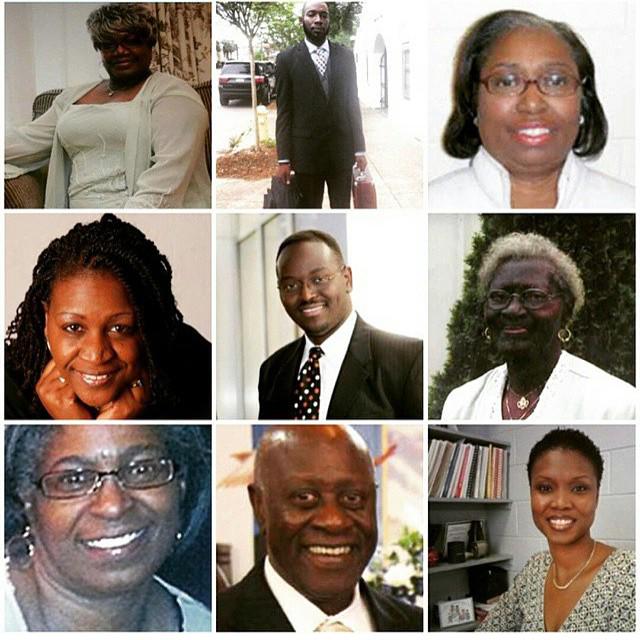
Nine bodies, each a
reflection of God’s glory. Nine faces, each the image of God. Nine stories,
immersed in God’s story. And one young man, also made in the image of God, a
child of a mainline protestant church, also hearing God’s story, but his head
filled instead with lies our culture has been telling for centuries—lies about
what he deserves, lies about “them,” lies about crime.
I want to say this is
unimaginable, that I can’t understand. But the thing is, I’m not sure it is so
unimaginable. We have become used to this kind of violence—it is a tragedy now
and in a couple of days we will have the privilege of forgetting about it until
the next time it happens. We don’t want to talk about underlying issues, don’t
want to name it for what it is, instead insisting that it was one guy, one
mental illness, one person who never grasped the message that God is love, and
that love is for all people. Over and over, several times a year, we make those
same claims. Charleston is the next chapter in our repeat of our history, the
logical next step in a past that we seem doomed to re-live because we refuse to
look honestly at it and then decide to be different.
Which was, sadly, the
exact situation in Corinth when Paul was writing to the church there.
Corinth was a Roman
colony, and was populated by two classes of people—the newly wealthy, and the
poor. The city was known to have lots of money but no class, heavy on
ostentation and low on cultural depth. The city and its people lacked charm and
grace, and they tried to make up for it with show and power. It was the
Corinthian Dream, really, to move there and work up the ladder to get into that
elite upper class.
Unfortunately, the way
they did that was by openly stepping all over the poor. The Corinthians had no
qualms about pushing other people down so they could climb up, no difficulty
with ignoring the needs of their neighbors because they didn’t have the status
or power to matter. It was a classic rich-get-richer-and-poor-get-poorer kind
of situation. Some people were kept down, others were buoyed up, and there was
very little social mobility…though that didn’t stop the dream.
We always hope the
church will be different—it will be the place where divisions fall away and all
that matters is that we are together worshipping God. But then as now, the
church was not terribly different from the world. The rich came early and
feasted before the poor could arrive for worship. The church was divided, with
some following one preacher and some another. The people still seemed to seek
the kind of philosophy that would help them reach their own goals, which had
primarily to do with prosperity and security.
And this is not the
first time they’ve corresponded with Paul. Though we call this letter 1st
Corinthians, Paul references at least one prior exchange of letters. So the
discussion is ongoing, and Paul is beginning to get exasperated.
Why are there
divisions? He writes. Why do you seem to believe that one preacher or another
is as good as Christ, or maybe better? Does the preacher die and rise for you?
You can practically hear the other preachers thinking “I hope not!”
As if calling out
their celebrity preacher crushes was not enough for the introduction of a
letter, Paul turns immediately to the point: the Corinthians look for wisdom
that will confirm what they think they know, that will support them in their
division and their warped understanding of themselves and the world. They look
for a philosophy that will make them look good, even if it has no depth…and
bonus if it helps them socially or economically.
But we proclaim
Christ, crucified and risen, the wisdom of God. And the idea that God’s wisdom
could involve a cross is stupid, at best. That God’s wisdom would also involve
peasants, subverting the economic and political system, and nonviolence is
beyond the comprehension of philosophy or common sense.
But God chose what is
foolish in the world to shame the wise. God chose what is weak in the world to
shame the strong. God chose what is low and despised to bring to nothing the
things that are revered.
Those are hard words
for those of us who unwittingly occupy the cultural space of strength, wisdom,
and power.
Can you imagine being
the church in the year 53, hearing these words directed at you for the first
time, as Paul’s voice calls out from the page, saying “you think you’re not a
part of the problem, but you are—you have bought into the wisdom of your world,
wisdom that says it is perfectly reasonable to keep going along with the
invisible system that benefits you. But God chose what is foolish and weak and
despised, and all that foolishness and weakness is stronger and wiser than
anything you can dream up. Wake up and see…and when you see, you can be changed.
It’s not too late to seek true wisdom rather than the culture’s wisdom.”
Of course, it is too
late for Cynthia, and Clementa, and Sharonda, and Daniel, and Depayne, and
Tywanza, and Myra, and Ethel, and Susie. It is too late for Dylann. It is too
late for countless other people who have been sacrificed to our wisdom. They
rest from their labors, and their works follow them.
Will ours?
Paul writes to remind
the Corinthians, and us, that there is just the one way to life—and that way
involves almost none of the things they pride themselves on. That way does not
step on people. That way does not trample God’s creation. That way does not
allow for some to be in and some to be left out—in just a few chapters he will
tie us together as one body, insisting that those who seem to be weaker are to
be more greatly honored. That way is not wide enough to accommodate all the
things we want to bring with us, including our unexamined privilege. The way is
wide enough for exactly one thing: a cross. The symbol of all that is despised
and shameful, the instrument of torture, the method of erasing people. The
cross, which so briefly held the body of our Lord but now stands empty to the
sky, connecting the world God so loved to the kingdom of heaven.
It’s Foolishness, of
course—let go of the assumptions that allow me to be comfortable in the world?
let go of the behaviors that make me feel good about myself? let go of the
things I love about my life and personality? Why would I do that?
Foolishness—love my
neighbor? what can they do for me? love my enemy? that will just get me killed.
lay aside weapons and resist with cunning and peace? sounds like a recipe for
disaster. love God more than anything? does that include my security? my home?
my great hair? Who is my neighbor? What does love mean anyway?
Foolishness—be in the
same mind and the same purpose? But I was promised freedom. I was told I was
responsible for myself, and only myself. I was told I could do whatever I
wanted when I grow up. I was told that our founders intended for me to pursue
my own happiness, not to be bogged down with other people, especially people
who impede my happiness and constrain my freedom.
And the message of the
cross is foolishness to those who are perishing. We who are continually shoring
up this world’s system, we have no free hands with which to take up the cross,
and we have too much stuff with us to walk through the narrow gate.
To those who are being
saved, though—being saved, in the
process of living into God’s call and promise—to we who are being saved, the cross
is the wisdom and power of God. To we who are earnestly seeking God’s path, the
cross offers a map and invitation—lay down your burden and come, follow. Lay
down the burden of blinders that keep us from owning our history and moving
forward in a new direction. Lay down the burden of self righteousness that
shadows our good intentions. Lay down the burden of helplessness that paralyzes
our faith. Then pick up the cross—knowing that it might hurt, and that it is
the only way.
Richard Rohr wrote
that “To pray and actually mean ‘thy Kingdom come,’ we must also be able
to say ‘my kingdoms go.’”
This is a hard prayer—“my kingdoms go.” The wisdom of the
world is something we can understand, hold on to, and point to when we want to
insist that none of this is our problem and we had nothing to do with it. Regardless
of what I think about it, the system of this culture works for me, as a white
middle class woman with a world class education and a strong loving family.
And yet every day I pray “thy kingdom come.”
There is a comic strip that shows a man sitting on a park
bench with Jesus. He asks Jesus “why do you allow so much suffering, hunger,
violence, and hate in the world?” and Jesus answers “I was just about to ask
you the same thing.”
So why do we allow it? Do we truly believe we can’t change
anything? Do we secretly believe everyone is on their own in the world and it
isn’t our job or problem? Or do we not want to, because it might be
uncomfortable or even dangerous? Are we worried about what happens when we lay
down false wisdom and embrace God’s foolishness?
I am worried about what happens when we don’t. The members
and pastors of Mother Emanuel church have paid the price already, alongside the
four girls in their Sunday School class in 1963 and countless others over the
years. 52 years ago, at the funeral for the girls killed by the bombing of
their church, Martin Luther King Junior begged us all, of every skin color, to
substitute courage for caution, and to be passionate in unmasking not only the
murderer but the system, way of life, and philosophy that allowed him to be
created in our midst. He pointed out that when we of the majority are silent,
it is the same as consent and approval for these horrific acts and mindsets. How
long will we believe that somehow they and we are not part of the same body of
Christ? How long will we, subconsciously or blatantly, insist that we are
different, separate, not responsible? How long will we renounce sin and evil
with our words, while we continue to unconsciously benefit from the racist systems
built by those who have gone before us? Or worse, to pretend we have no part in
this sin of racism? For if we say we have no sin, we deceive only ourselves and
there is no room for truth in us.
Friends, when even the church that has been the symbol of
freedom for a people, a sanctuary, is a place of terror, then it is well past
time for us to take up the cross that our sisters and brothers of color have
been carrying for so long. Otherwise we run the risk of being salt that has
lost its saltiness, and leaving the world to the kind of wisdom that reigned in
Corinth and still reigns today.
It’s hard work. Uncomfortable work. Standing up and saying
no more, refusing to stand by when stereotypes are perpetuated, standing beside
people rather than over them—sounds suspiciously like Jesus. And as Baptist
preacher Vance Havner wrote, “Salt seasons, purifies, preserves. But somebody
ought to remind us that salt also irritates. Real living Christianity rubs this world the wrong way.”
And we are the body of Christ, and we have seen the still
more excellent way—the question is whether we will walk it into abundant life
for all, or choose the easier path that leads only to destruction.
So this week, pay attention to how this kingdom benefits
you, and then pray “my kingdom go.” Find a way to stand up for justice, for
equality, against racism and sexism, for nonviolence, for hope. Pray “my
kingdom go, your kingdom come” over and over, and allow God to use your life as
a candle that lights the darkness, a conduit for the Spirit to move the whole
world, one step at a time.
May it be so. Amen.
~~~~~
related, but not used in worship, this:
Thursday, June 18, 2015
Our
(I write as a privileged, middle class, white female mainline protestant citizen of the USA....and, today, primarily to those people who occupy a similar space to mine.)
We use the word "our" to describe people all the time. They're our people--people with whom we share ideals. They're our kids--kids who live nearby, go to neighborhood schools, sit in the same pews we do. They're our troops--who put their lives on the line to "protect our freedom."
But for some reason we neglect to use the word our when we talk about children killed by police at the playground. We don't say that Trayvon or Tamir or Michael are our kids. We also neglect to use it when we talk about people who commit acts of violence. Dylann Roof isn't one of ours.
If one member of the Body suffers, all suffer together with it.
How is it, again, that we, of all people, THE CHURCH, are capable of using the word "they"??
And if we want to leave aside the faith part and just think on a civitas/polis scale: how can we deny that Rev. Pinckney, Coach Coleman, Librarian Hurd, Sexton Ethel, new college graduate Sanders, Mrs. Thompson, Rev. Dr. Simmons, Freddie, Pearlie, May, Eric, Aura, Renisha, Lavall, Antonio, Nicholas, Oscar, Sean, Kevin, Akai, Walter, Jordan, Rekia, Aiyana, and countless more, are ours? How can we deny that Timothy, Dylann, and all the terrorists in between are ours?
They are us. And just as they are ours, we are theirs. That's what it means to be part of one nation under God, or the Body of Christ.
Think about what we mean when we talk about people as "ours." We mean that they are part of our family or community, that somehow we identify with them. We also often mean that they mean something to us, and that we have some part to play in their lives. We have a commitment to the kids of our church, the teachers at our neighborhood schools, our cousin's sister-in-law's brother, our local librarians and auto mechanics, our local graduates who join the military, etc. We think of ourselves as having something to do with them. Maybe even some small responsibility to hold them accountable, just as much as we love and care for them--even if we've never actually met them in person. When a kid from the cross country team was hit by a car in the neighborhood of the church, the news was about "our kids." (Interestingly, when an autistic 5 year old was hit by a car just a few blocks away..."you really have to watch.")
When it's our kids, our people, our troops, we care, and we see some level of responsibility, and we mobilize when things happen--good or bad.
What would happen if we thought of each one of those people at last night's Bible Study at Emanuel AME Church as "ours"? What would happen if we thought of Mike Brown as "ours"? What would happen if we thought of Tamir Rice as "ours"? What would happen if we thought of Eric Garner as "ours"?
And what would happen if we thought of Dylann Roof as "ours"? What would happen if we thought of the police officers of the McKinney TX police department as "ours"? What would happen if we thought of Adam Lanza as "ours"?
Because here's the thing: they are ours. These beloved children of God, made in God's image, simultaneously sinner and justified, are our kids, our neighbors, our troops, our brothers and sisters, our responsibility.
Which means that when one suffers, we all suffer. When one dies, we all die. When one hurts, we all hurt. When one does harm, we all bear some of that guilt and pain. When one celebrates, we all celebrate. After all, we celebrate when one of our kids graduates. We grieve when one of our neighbors dies. We groan alongside our friends who are ill. We would be outraged if one of our Bible Studies were the scene of terrorism. And we would wonder what happened and how we could have done something differently if the shooter were one of ours.
Time to celebrate, and grieve, and groan, and be outraged, and think about how we could have done something differently. We are just as much a part of creating and maintaining this culture as anyone else. How about we make it better for everyone, not just the people who look/think/act/speak like us?
There are many members but one body. The eye cannot say to the hand, "I have no need of you," nor again the head to the feet, "I have no need of you." On the contrary, the members of the body that seem to be weaker are indispensable. Now y'all are the Body of Christ, and individually members of it.
It's time to start acting like it.
Past time.
We use the word "our" to describe people all the time. They're our people--people with whom we share ideals. They're our kids--kids who live nearby, go to neighborhood schools, sit in the same pews we do. They're our troops--who put their lives on the line to "protect our freedom."
But for some reason we neglect to use the word our when we talk about children killed by police at the playground. We don't say that Trayvon or Tamir or Michael are our kids. We also neglect to use it when we talk about people who commit acts of violence. Dylann Roof isn't one of ours.
If one member of the Body suffers, all suffer together with it.
How is it, again, that we, of all people, THE CHURCH, are capable of using the word "they"??
And if we want to leave aside the faith part and just think on a civitas/polis scale: how can we deny that Rev. Pinckney, Coach Coleman, Librarian Hurd, Sexton Ethel, new college graduate Sanders, Mrs. Thompson, Rev. Dr. Simmons, Freddie, Pearlie, May, Eric, Aura, Renisha, Lavall, Antonio, Nicholas, Oscar, Sean, Kevin, Akai, Walter, Jordan, Rekia, Aiyana, and countless more, are ours? How can we deny that Timothy, Dylann, and all the terrorists in between are ours?
They are us. And just as they are ours, we are theirs. That's what it means to be part of one nation under God, or the Body of Christ.
Think about what we mean when we talk about people as "ours." We mean that they are part of our family or community, that somehow we identify with them. We also often mean that they mean something to us, and that we have some part to play in their lives. We have a commitment to the kids of our church, the teachers at our neighborhood schools, our cousin's sister-in-law's brother, our local librarians and auto mechanics, our local graduates who join the military, etc. We think of ourselves as having something to do with them. Maybe even some small responsibility to hold them accountable, just as much as we love and care for them--even if we've never actually met them in person. When a kid from the cross country team was hit by a car in the neighborhood of the church, the news was about "our kids." (Interestingly, when an autistic 5 year old was hit by a car just a few blocks away..."you really have to watch.")
When it's our kids, our people, our troops, we care, and we see some level of responsibility, and we mobilize when things happen--good or bad.
What would happen if we thought of each one of those people at last night's Bible Study at Emanuel AME Church as "ours"? What would happen if we thought of Mike Brown as "ours"? What would happen if we thought of Tamir Rice as "ours"? What would happen if we thought of Eric Garner as "ours"?
And what would happen if we thought of Dylann Roof as "ours"? What would happen if we thought of the police officers of the McKinney TX police department as "ours"? What would happen if we thought of Adam Lanza as "ours"?
Because here's the thing: they are ours. These beloved children of God, made in God's image, simultaneously sinner and justified, are our kids, our neighbors, our troops, our brothers and sisters, our responsibility.
Which means that when one suffers, we all suffer. When one dies, we all die. When one hurts, we all hurt. When one does harm, we all bear some of that guilt and pain. When one celebrates, we all celebrate. After all, we celebrate when one of our kids graduates. We grieve when one of our neighbors dies. We groan alongside our friends who are ill. We would be outraged if one of our Bible Studies were the scene of terrorism. And we would wonder what happened and how we could have done something differently if the shooter were one of ours.
Time to celebrate, and grieve, and groan, and be outraged, and think about how we could have done something differently. We are just as much a part of creating and maintaining this culture as anyone else. How about we make it better for everyone, not just the people who look/think/act/speak like us?
There are many members but one body. The eye cannot say to the hand, "I have no need of you," nor again the head to the feet, "I have no need of you." On the contrary, the members of the body that seem to be weaker are indispensable. Now y'all are the Body of Christ, and individually members of it.
It's time to start acting like it.
Past time.
Saturday, May 23, 2015
history matters
 The news about Palmyra is distressing. (though the latest news today, that ISIS have placed guards at the ancient site, is the tiniest of glimmers of hope for antiquity, it's still not good.) I have been there, and can picture the place and the people in my mind (and in my photo album). I remember standing on the stage of the theater in the Roman ruins and playing the recorder as a way of demonstrating the acoustics of the place. I remember my roommate and I being left behind (and retrieved later, thankfully)...a demonstration of the potential for failure in the buddy system. I remember walking around this place in the desert, climbing the tower and marveling at how these things still stand out in the middle of the desert. I remember meeting people whose connection to this desert oasis wends its way through millennia.

ISIS has been known to destroy historical sites and artifacts before, because anything non-muslim (including things that predate Islam by hundreds and thousands of years) is idolatrous. Unfortunately that also destroys both any potential future economy based on tourism as well as, more importantly, a whole people's connection to a long and glorious past. And even as those ancient walls come down, new ones are built, between neighbors, between families, between friends...because where once it was common for Christians and Muslims (both of various flavors) to coexist, work together, be friends, etc, now that is nearly impossible. Along with holy and archaeologically significant sites goes the kinship of the Syrian people, which goes back hundreds of generations.
(and I can't even get into the human toll of this "conflict" (so much more than a conflict) in the present--it is beyond imagining, the suffering and grief and fear.)
As ISIS continues to advance, taking control of more cities, oppressing more people, and destroying more history, I thought I'd share this piece I wrote for another publication that ended up not being published.
First, some more photos from the ancient city of Palmyra...
 |
| can you see me in the window up there? |


 |
| I call this the "column graveyard"--the place where pieces are laid out together but there is not sufficient knowledge to put them back together and place them within the complex of buildings. |
According to tradition, the Prophet Mohammed visited the monastery of St. Catherine’s at the foot of Mt. Sinai in the 7th century. He sought the wisdom of the monks there, and later wrote a letter of protection for the monastery, which was reaffirmed in the 16th century, declaring that these People of the Book were to be safe from harm and from attempts at conversion. A mosque and minaret were built inside the walls of the monastery, as a visual symbol of the protective relationship between these brother faiths.
Over the centuries, that friendship has deteriorated into a minimum of tolerance, and now the corruption of the faith traditions has brought outright hostility. Life was not easy for Christians in pre-Arab-Spring nations—building permits were routinely denied simply because they were filed by Christians, evangelism and conversion were illegal, and the entire governmental, legal, and judicial system gave preference to Islam. But now those things seem almost reasonable in comparison to the impossibility of life as a Christian or a Christian community in these days. The ranks of the martyrs grow daily, as do the ranks of the émigré. Of the many friends I made while living in Cairo, only a few remain; the rest have scattered to Australia, Canada, the United Kingdom, Sweden, and two to the USA. The cradle of civilization and of many of the world’s great faiths is being emptied of all of them—including Islam, in its truest sense.
In place of a beautiful tradition of peace and submission to God, there is now a premium priority on a cultural reality that is as foreign to many of us in the west as the ancient languages still spoken there.
The culture of much of the area we call “the Middle East” is based on a tribal honor-and-shame system, and this system requires a very strong leader who will maintain order and image. This leader ensures that there is nothing that would disturb the outside world’s perceptions of the quality, success, and peace of the tribe—and will often use any means to do so. While Americans look at leaders like Saddam or Mubarak and see dictators, people within those tribes see a strong leader who keeps them together and who keeps their family business within the family. While life was not easy for Christians under those dictators, it was still relatively calm and peaceful. Churches could gather for worship and study (though building a church was extremely difficult), Christians could (and did) engage in many charitable and developmental ministries, improving the lives of many who would otherwise be neglected. As long as they didn’t proselytize, the gospel could be lived out without words. And the family order was maintained, if only at the barest level of the Prophet’s command.
Other forms of leadership, based on other kinds of power, are weak in this kind of cultural reality, and make it difficult to shift toward a more open or democratic system. So we see it today: where strong leaders have been felled, thus bringing shame on the tribe, now others rise up to return the tribe to its former status and restore the peace. Many of them think the way to that restoration is by the same kind of violent power that worked in the past, and so we see the horrors perpetrated by both governments and groups like ISIS. All dissent must be crushed in order to bring back the calm and honor of the family—in this case, the family of a particular brand of militant “Islam”.
While the Prophet was friends with Christians and ordered their protection, groups like ISIS take another path, one that violates every sense of humanity and brings more dishonor on them than they can see. Their faith is corrupted, just as they believe their tribe has been corrupted. In many ways, it is a farce to call them ISIS, because there is nothing Islamic about them—they are so far from the tenets and roots of their faith as to be unrecognizable.
Our sisters and brothers in Christ bear the brunt of this form of “Islam,” unmoored from its story and its roots. We who live far removed from the daily reality of persecution and the very real threat of death for our faith have a hard time even contemplating these horrors, let alone understanding. As we pray for peace, as we lobby our government to find some way to protect people without causing more of a mess than we already have, and as we look for ways to ensure our dollars don’t inadvertently go to support the *ISIS cause, it is important also for us to realize how easy it is to become disconnected from our story, and then we become capable of great terror. History matters. Scripture matters. Our connection to the story God has been telling since the beginning matters. It is what makes us human, and capable of honoring the humanity of others. May those who twist their tradition to support their violent ideology be re-connected with the ground of their humanity and the source of their faith.
Thursday, May 14, 2015
For all the politicians' talk about "Main Street"...
In this morning's New York Times there is an article that strikes me as summing up all that is wrong in our priorities...when people ask (usually rhetorically) how we got where we are as a country, what happened to the way things used to be, why there are so many people protesting in the streets or using welfare or homeless or or or...this is the answer to why. The headline and first two sentences pretty well sum it up, followed by this paragraph buried in the middle.
Five Big Banks Expected to Plead Guilty to Felony Charges, but Punishments May Be Tempered
"For most people, pleading guilty to a felony means they will very likely land in prison, lose their job and forfeit their right to vote. But when five of the world’s biggest banks plead guilty to an array of antitrust and fraud charges as soon as next week, life will go on, probably without much of a hiccup."
(yes, this is true. In fact, it is so true that we have the largest prison population in the world, both per capita and in real numbers. In the last 35 years, we have built 22 prisons for every university. Families are torn apart and lives ruined by massive sentences for even small infractions that have been deemed felonies, and this happens at a much higher rate among ethnic minorities than among whites. It creates a cycle of poverty and prison that is difficult to escape from, especially as the stigma of having a family member in prison generally means that families get little or no support. It is not a stretch to suggest that the continued systemic racism in this country, the poverty rates that lead to crime, and the current protests and "riots" are all related to this reality.)
Meanwhile, black men fill our prisons. Not important, apparently. Never mind their importance to their families, to their communities, to the future of this diverse country. Never mind that small things that are counted as felonies get people put into prisons where, upon their release, all they have learned is anger and resentment and skills for bigger crimes, should they want to put that resentment into action. Never mind that we simultaneously perpetuate the myth of the absentee father in the black community, even while putting millions of people in jail. They are not important enough, not central to their community, not crucial for the economy.
The article calls this prosecution and conviction "an exercise in stagecraft." How many families, and communities, wish that their loved ones and breadwinners--often stopped on spurious reasons--could experience the courts as an exercise in stagecraft? (I can hear the protests now: "but how will we deter others from committing crimes????")
Of course, they'd have to make it to court, which is a fairly unlikely outcome. But still.
Imagine if we treated our people like our corporations.
Or imagine if we actually treated corporations--made up of people--the way we treat other people. Without regard for their importance to the community, without regard for their past or potential, without regard for their context or humanity, we will criminalize their very existence, create minimum sentencing laws that ensure the cycle of poverty for another generation, and then demonize them for being in debt, uneducated, and prone to violence. We would insist we're not corporationist, some of our best friends are corporations, it's just that they should have known better, shouldn't have closed the door, shouldn't have opened the door, shouldn't have let the light in one letter of their sign go out, shouldn't have been in that neighborhood. Since they didn't manage that, they deserve what they get, both them and their family/community be damned. After all, we need to deter people from doing what they did.
Next time someone asks what happened to the America they remember, this is what we should show them. We chose corporations over people. We decided to use the adjective "our" to mean banks, not children. We bought into the lie that big businesses are the core of our country's success, rather than that our people are at the center of American identity and prosperity.
We chose this. And, as every parent is constantly trying to teach their children: choices have consequences.
Unfortunately, the consequences fall primarily on them, meaning we will go on choosing it until the day someone wakes up and realizes that they are US.
Five Big Banks Expected to Plead Guilty to Felony Charges, but Punishments May Be Tempered
"For most people, pleading guilty to a felony means they will very likely land in prison, lose their job and forfeit their right to vote. But when five of the world’s biggest banks plead guilty to an array of antitrust and fraud charges as soon as next week, life will go on, probably without much of a hiccup."
(yes, this is true. In fact, it is so true that we have the largest prison population in the world, both per capita and in real numbers. In the last 35 years, we have built 22 prisons for every university. Families are torn apart and lives ruined by massive sentences for even small infractions that have been deemed felonies, and this happens at a much higher rate among ethnic minorities than among whites. It creates a cycle of poverty and prison that is difficult to escape from, especially as the stigma of having a family member in prison generally means that families get little or no support. It is not a stretch to suggest that the continued systemic racism in this country, the poverty rates that lead to crime, and the current protests and "riots" are all related to this reality.)
"Behind the scenes in Washington, the banks’ lawyers are also seeking assurances from federal regulators — including the Securities and Exchange Commission and the Labor Department — that the banks will not be barred from certain business practices after the guilty pleas, the people said. While the S.E.C.’s five commissioners have not yet voted on the requests for waivers, which would allow the banks to conduct business as usual despite being felons, the people briefed on the matter expected a majority of commissioners to grant them."Umm...okay. So let's get this straight. Corporations are people, but they will be allowed to continue doing the very things of which they have been convicted. These companies are, according to the article, too important to be punished.
Meanwhile, black men fill our prisons. Not important, apparently. Never mind their importance to their families, to their communities, to the future of this diverse country. Never mind that small things that are counted as felonies get people put into prisons where, upon their release, all they have learned is anger and resentment and skills for bigger crimes, should they want to put that resentment into action. Never mind that we simultaneously perpetuate the myth of the absentee father in the black community, even while putting millions of people in jail. They are not important enough, not central to their community, not crucial for the economy.
The article calls this prosecution and conviction "an exercise in stagecraft." How many families, and communities, wish that their loved ones and breadwinners--often stopped on spurious reasons--could experience the courts as an exercise in stagecraft? (I can hear the protests now: "but how will we deter others from committing crimes????")
Of course, they'd have to make it to court, which is a fairly unlikely outcome. But still.
Imagine if we treated our people like our corporations.
Or imagine if we actually treated corporations--made up of people--the way we treat other people. Without regard for their importance to the community, without regard for their past or potential, without regard for their context or humanity, we will criminalize their very existence, create minimum sentencing laws that ensure the cycle of poverty for another generation, and then demonize them for being in debt, uneducated, and prone to violence. We would insist we're not corporationist, some of our best friends are corporations, it's just that they should have known better, shouldn't have closed the door, shouldn't have opened the door, shouldn't have let the light in one letter of their sign go out, shouldn't have been in that neighborhood. Since they didn't manage that, they deserve what they get, both them and their family/community be damned. After all, we need to deter people from doing what they did.
Next time someone asks what happened to the America they remember, this is what we should show them. We chose corporations over people. We decided to use the adjective "our" to mean banks, not children. We bought into the lie that big businesses are the core of our country's success, rather than that our people are at the center of American identity and prosperity.
We chose this. And, as every parent is constantly trying to teach their children: choices have consequences.
Unfortunately, the consequences fall primarily on them, meaning we will go on choosing it until the day someone wakes up and realizes that they are US.
Sunday, January 04, 2015
dreaming in the dark: a sermon for Epiphany
Rev. Teri Peterson
PCOP
dreaming in the dark
Matthew 2.1-23
4 January 2015, Epiphany, NL1-18
In the time of King Herod, after Jesus was born in Bethlehem of Judea, wise men from the East came to Jerusalem, asking, ‘Where is the child who has been born king of the Jews? For we observed his star at its rising, and have come to pay him homage.’ When King Herod heard this, he was frightened, and all Jerusalem with him; and calling together all the chief priests and scribes of the people, he inquired of them where the Messiah was to be born. They told him, ‘In Bethlehem of Judea; for so it has been written by the prophet:
“And you, Bethlehem, in the land of Judah,
are by no means least among the rulers of Judah;
for from you shall come a ruler
who is to shepherd my people Israel.” ’
Then Herod secretly called for the wise men and learned from them the exact time when the star had appeared. Then he sent them to Bethlehem, saying, ‘Go and search diligently for the child; and when you have found him, bring me word so that I may also go and pay him homage.’ When they had heard the king, they set out; and there, ahead of them, went the star that they had seen at its rising, until it stopped over the place where the child was. When they saw that the star had stopped, they were overwhelmed with joy. On entering the house, they saw the child with Mary his mother; and they knelt down and paid him homage. Then, opening their treasure-chests, they offered him gifts of gold, frankincense, and myrrh. And having been warned in a dream not to return to Herod, they left for their own country by another road.
Now after they had left, an angel of the Lord appeared to Joseph in a dream and said, ‘Get up, take the child and his mother, and flee to Egypt, and remain there until I tell you; for Herod is about to search for the child, to destroy him.’ Then Joseph got up, took the child and his mother by night, and went to Egypt, and remained there until the death of Herod. This was to fulfill what had been spoken by the Lord through the prophet, ‘Out of Egypt I have called my son.’
When Herod saw that he had been tricked by the wise men, he was infuriated, and he sent and killed all the children in and around Bethlehem who were two years old or under, according to the time that he had learned from the wise men. Then was fulfilled what had been spoken through the prophet Jeremiah:
‘A voice was heard in Ramah,
wailing and loud lamentation,
Rachel weeping for her children;
she refused to be consoled, because they are no more.’
When Herod died, an angel of the Lord suddenly appeared in a dream to Joseph in Egypt and said, ‘Get up, take the child and his mother, and go to the land of Israel, for those who were seeking the child’s life are dead.’ Then Joseph got up, took the child and his mother, and went to the land of Israel. But when he heard that Archelaus was ruling over Judea in place of his father Herod, he was afraid to go there. And after being warned in a dream, he went away to the district of Galilee. There he made his home in a town called Nazareth, so that what had been spoken through the prophets might be fulfilled, ‘He will be called a Nazorean.’
~~~~~~
Have you ever used the phrase “we all know how that ends”? I’ve heard and said it about stories, some from this very book, as well as used sarcastically to suggest that something is not a good idea.
This story seems to fall outside “we all know how that ends”—I would be willing to bet that very few people know how the Christmas story ends, actually. The pageants and the movies end with the wise men and shepherds going home and sharing the good news, and then we move on to adult Jesus out teaching and healing and calling disciples. For some reason we almost always cut out the actual end of the birth story as Matthew tells it—the part where the wise men’s decision to stop following the star and start following their usual script leads to the death of a whole town’s worth of children.
If we do talk about it, we often read this in the context of the larger story Matthew is setting up—he wants to prove that Jesus is the fulfillment of all the prophecy, that he is the new Moses, and so he makes sure to tell us the story of how the holy family came to be in Egypt, so that the Son could be called out of Egypt. We talk about the importance of Jesus leading God’s people to freedom from sin the way Moses led people to freedom from Pharaoh. We conveniently gloss over the dozens, perhaps even hundreds, of tiny coffins that paved the way.
It’s easy to do this, of course. For one thing, we don’t like to be uncomfortable, and we especially don't like scripture to make us uncomfortable. For another, stories like this one don’t fit our image of the Christmas story as all about peace and harmony and surprisingly clean animals in a surprisingly snow-covered stable.
But that’s the thing about epiphanies—they rarely fit our Christmas-card understanding, and they often make us uncomfortable. Like a light that is too bright and makes us want to shield our eyes, or put on sunglasses, or put our head down and look at only a tiny piece of the world right in front of our feet, Epiphany—the revealing of God in the human Jesus—might hurt a little bit, and we might want to turn away. We might be tempted to walk our well-worn paths of explanation and excuse, because the light is too bright on any other way. And yet the light keeps shining, on and on, urging us to just try to look, just try to open ourselves enough to perceive God’s action, God’s presence, just try to take in the wonders of God’s grace.
The wise men were doing a pretty good job, weren’t they? They were outsiders, people of a different religion and a different skin color and different foods and a different language. But they were paying attention, and they were courageous enough to set out from home to see this important thing happening in the world. They saw the light and they followed it. Yet they would follow only so far, and then they knew how the story ends. After all, they were learned men, they studied the stars and the texts, they knew their history and their mythology. They knew that such a light could only mean one thing: a king. And they knew that kings were in palaces. So, naturally, their eyes turned toward their own understanding, leaving the light behind.
How often do we walk by habit, almost with blinders on, because we already know how this story goes? How often are we looking right past the light to our own predetermined plan?
Eventually they get it right, with some help from Herod and the royal scholars. They head the last 6 miles from Jerusalem to Bethlehem, where they find the star had been waiting all along, and where the child called God-With-Us was growing up in a family, in a neighborhood, in a synagogue. They present the gifts of kings, confusing the heck out of his parents, but preparing the way for how this story will proceed much farther down the line. And then, in the dark of night, they have a dream, and they finally manage to blaze a new trail, rather than going again and again over the one they had already trod.
But Herod…Herod has heard about the light now. And sometimes we cannot handle light brighter than our own. He could not risk people seeing by this light God had sent. He wasn’t finished with his own power scheme, so it couldn’t possibly be time for the Messiah yet. He liked the throne, and the light shining out of that little house in Bethlehem might not only eclipse his own, but it might also illuminate all his faults and failings—both as a Jew who bowed to Roman idols and as a Jewish king who danced to the tune of the Roman emperor. He needed the darkness, so he created it, dimming the eyes of mothers with tears as the light went out from their children.
How often does our fear, or our privilege, need the darkness?
The soldiers came, and with impunity they killed the future of a whole community. Because one man believed his life was in danger, a gaping hole was slashed in every family tree. No incident report, no trial…it was justified, after all. Best not to bring these things to light.
Where was God-with-us while Herod’s power trip was mowing down Jesus’ neighbors and playmates? It must have felt as if the very light of God had fled along with the holy family. Where once the darkness held dreams, now only a nightmare.
‘A voice was heard in Ramah,
wailing and loud lamentation,
Rachel weeping for her children;
she refused to be consoled, because they are no more.’
We don’t like this. We want people to grieve quietly, not with wailing and loud lamentation. We want it to be appropriate, and private if at all possible. We want to be able to console, to comfort, to offer words or casseroles that will make it all better. And those things matter, they really do. They are the presence of God in the midst of pain. But if they are accompanied by any whiff of “when will she move on?” then we are working for ourselves, not God. It’s counterintuitive; we see this kind of inconsolable horror as the darkness, needing the light of encouragement and busyness and laughter. But to sit, stand, march, refusing to be consoled, is also to stare into the face of injustice and refuse to back down. It is to stand hand in hand with the creator and stand up to evil, insisting not only that God hear, but that the world hear: we will not simply put up with someone’s fear and privilege blotting out the light of life.
When Rachel wails, when the mothers of Bethlehem weep, when Pakistani fathers carry lifeless bodies out of a school, when communities block traffic by lying in the streets, when people swarm the steps of government buildings begging for justice, when the people of God refuse to be consoled because others made in God’s image are no more…it forces the rest of us to face our discomfort. Will we complain or whisper or gossip? Will we shake our heads and say a prayer then forget? Or can we stand there, hand in hand with the prince of peace, and look into the darkness?…By looking and wailing and sitting, by refusing to offer platitudes or to hint that we know a better way, maybe we begin to let the light in.
How often do we insist on moving on, being appropriate, putting on our shades and lowering our eyes, taking an easier way, rather than standing to stare into the despair and hold its gaze until it is the darkness that has to back down this time?
Light can be a dangerous thing. It is also beautiful, and healing, if we will let it in.
May it be so. Amen.
PCOP
dreaming in the dark
Matthew 2.1-23
4 January 2015, Epiphany, NL1-18
In the time of King Herod, after Jesus was born in Bethlehem of Judea, wise men from the East came to Jerusalem, asking, ‘Where is the child who has been born king of the Jews? For we observed his star at its rising, and have come to pay him homage.’ When King Herod heard this, he was frightened, and all Jerusalem with him; and calling together all the chief priests and scribes of the people, he inquired of them where the Messiah was to be born. They told him, ‘In Bethlehem of Judea; for so it has been written by the prophet:
“And you, Bethlehem, in the land of Judah,
are by no means least among the rulers of Judah;
for from you shall come a ruler
who is to shepherd my people Israel.” ’
Then Herod secretly called for the wise men and learned from them the exact time when the star had appeared. Then he sent them to Bethlehem, saying, ‘Go and search diligently for the child; and when you have found him, bring me word so that I may also go and pay him homage.’ When they had heard the king, they set out; and there, ahead of them, went the star that they had seen at its rising, until it stopped over the place where the child was. When they saw that the star had stopped, they were overwhelmed with joy. On entering the house, they saw the child with Mary his mother; and they knelt down and paid him homage. Then, opening their treasure-chests, they offered him gifts of gold, frankincense, and myrrh. And having been warned in a dream not to return to Herod, they left for their own country by another road.
Now after they had left, an angel of the Lord appeared to Joseph in a dream and said, ‘Get up, take the child and his mother, and flee to Egypt, and remain there until I tell you; for Herod is about to search for the child, to destroy him.’ Then Joseph got up, took the child and his mother by night, and went to Egypt, and remained there until the death of Herod. This was to fulfill what had been spoken by the Lord through the prophet, ‘Out of Egypt I have called my son.’
When Herod saw that he had been tricked by the wise men, he was infuriated, and he sent and killed all the children in and around Bethlehem who were two years old or under, according to the time that he had learned from the wise men. Then was fulfilled what had been spoken through the prophet Jeremiah:
‘A voice was heard in Ramah,
wailing and loud lamentation,
Rachel weeping for her children;
she refused to be consoled, because they are no more.’
When Herod died, an angel of the Lord suddenly appeared in a dream to Joseph in Egypt and said, ‘Get up, take the child and his mother, and go to the land of Israel, for those who were seeking the child’s life are dead.’ Then Joseph got up, took the child and his mother, and went to the land of Israel. But when he heard that Archelaus was ruling over Judea in place of his father Herod, he was afraid to go there. And after being warned in a dream, he went away to the district of Galilee. There he made his home in a town called Nazareth, so that what had been spoken through the prophets might be fulfilled, ‘He will be called a Nazorean.’
~~~~~~
Have you ever used the phrase “we all know how that ends”? I’ve heard and said it about stories, some from this very book, as well as used sarcastically to suggest that something is not a good idea.
This story seems to fall outside “we all know how that ends”—I would be willing to bet that very few people know how the Christmas story ends, actually. The pageants and the movies end with the wise men and shepherds going home and sharing the good news, and then we move on to adult Jesus out teaching and healing and calling disciples. For some reason we almost always cut out the actual end of the birth story as Matthew tells it—the part where the wise men’s decision to stop following the star and start following their usual script leads to the death of a whole town’s worth of children.
If we do talk about it, we often read this in the context of the larger story Matthew is setting up—he wants to prove that Jesus is the fulfillment of all the prophecy, that he is the new Moses, and so he makes sure to tell us the story of how the holy family came to be in Egypt, so that the Son could be called out of Egypt. We talk about the importance of Jesus leading God’s people to freedom from sin the way Moses led people to freedom from Pharaoh. We conveniently gloss over the dozens, perhaps even hundreds, of tiny coffins that paved the way.
It’s easy to do this, of course. For one thing, we don’t like to be uncomfortable, and we especially don't like scripture to make us uncomfortable. For another, stories like this one don’t fit our image of the Christmas story as all about peace and harmony and surprisingly clean animals in a surprisingly snow-covered stable.
But that’s the thing about epiphanies—they rarely fit our Christmas-card understanding, and they often make us uncomfortable. Like a light that is too bright and makes us want to shield our eyes, or put on sunglasses, or put our head down and look at only a tiny piece of the world right in front of our feet, Epiphany—the revealing of God in the human Jesus—might hurt a little bit, and we might want to turn away. We might be tempted to walk our well-worn paths of explanation and excuse, because the light is too bright on any other way. And yet the light keeps shining, on and on, urging us to just try to look, just try to open ourselves enough to perceive God’s action, God’s presence, just try to take in the wonders of God’s grace.
The wise men were doing a pretty good job, weren’t they? They were outsiders, people of a different religion and a different skin color and different foods and a different language. But they were paying attention, and they were courageous enough to set out from home to see this important thing happening in the world. They saw the light and they followed it. Yet they would follow only so far, and then they knew how the story ends. After all, they were learned men, they studied the stars and the texts, they knew their history and their mythology. They knew that such a light could only mean one thing: a king. And they knew that kings were in palaces. So, naturally, their eyes turned toward their own understanding, leaving the light behind.
How often do we walk by habit, almost with blinders on, because we already know how this story goes? How often are we looking right past the light to our own predetermined plan?
Eventually they get it right, with some help from Herod and the royal scholars. They head the last 6 miles from Jerusalem to Bethlehem, where they find the star had been waiting all along, and where the child called God-With-Us was growing up in a family, in a neighborhood, in a synagogue. They present the gifts of kings, confusing the heck out of his parents, but preparing the way for how this story will proceed much farther down the line. And then, in the dark of night, they have a dream, and they finally manage to blaze a new trail, rather than going again and again over the one they had already trod.
But Herod…Herod has heard about the light now. And sometimes we cannot handle light brighter than our own. He could not risk people seeing by this light God had sent. He wasn’t finished with his own power scheme, so it couldn’t possibly be time for the Messiah yet. He liked the throne, and the light shining out of that little house in Bethlehem might not only eclipse his own, but it might also illuminate all his faults and failings—both as a Jew who bowed to Roman idols and as a Jewish king who danced to the tune of the Roman emperor. He needed the darkness, so he created it, dimming the eyes of mothers with tears as the light went out from their children.
How often does our fear, or our privilege, need the darkness?
The soldiers came, and with impunity they killed the future of a whole community. Because one man believed his life was in danger, a gaping hole was slashed in every family tree. No incident report, no trial…it was justified, after all. Best not to bring these things to light.
Where was God-with-us while Herod’s power trip was mowing down Jesus’ neighbors and playmates? It must have felt as if the very light of God had fled along with the holy family. Where once the darkness held dreams, now only a nightmare.
‘A voice was heard in Ramah,
wailing and loud lamentation,
Rachel weeping for her children;
she refused to be consoled, because they are no more.’
We don’t like this. We want people to grieve quietly, not with wailing and loud lamentation. We want it to be appropriate, and private if at all possible. We want to be able to console, to comfort, to offer words or casseroles that will make it all better. And those things matter, they really do. They are the presence of God in the midst of pain. But if they are accompanied by any whiff of “when will she move on?” then we are working for ourselves, not God. It’s counterintuitive; we see this kind of inconsolable horror as the darkness, needing the light of encouragement and busyness and laughter. But to sit, stand, march, refusing to be consoled, is also to stare into the face of injustice and refuse to back down. It is to stand hand in hand with the creator and stand up to evil, insisting not only that God hear, but that the world hear: we will not simply put up with someone’s fear and privilege blotting out the light of life.
When Rachel wails, when the mothers of Bethlehem weep, when Pakistani fathers carry lifeless bodies out of a school, when communities block traffic by lying in the streets, when people swarm the steps of government buildings begging for justice, when the people of God refuse to be consoled because others made in God’s image are no more…it forces the rest of us to face our discomfort. Will we complain or whisper or gossip? Will we shake our heads and say a prayer then forget? Or can we stand there, hand in hand with the prince of peace, and look into the darkness?…By looking and wailing and sitting, by refusing to offer platitudes or to hint that we know a better way, maybe we begin to let the light in.
How often do we insist on moving on, being appropriate, putting on our shades and lowering our eyes, taking an easier way, rather than standing to stare into the despair and hold its gaze until it is the darkness that has to back down this time?
Light can be a dangerous thing. It is also beautiful, and healing, if we will let it in.
May it be so. Amen.
Saturday, November 29, 2014
all the things
I have officially eaten all the things, both at my own house (deviled eggs, tofurkey, mashed potatoes, green bean casserole, crescent rolls) and at a friend's house (cheesy potatoes, cheesy green bean casserole, veggie stuffing, cheesecake brûlée). I have also played games, petted both cats and dogs, laughed uproariously, and had serious conversations about politics, race, the meaning of justice, scripture, and the history of cuckoo clocks.
I have struggled with what to say about the justice situation in this country. I am distressed by how easily we dismiss the suffering of others. I am angry about how little we value life in all its fullness. I am saddened by the divide that seems more cavernous than ever. Part of me hesitates to write what I think, because I recognize that I have the privilege of not engaging. And another part of me wants desperately to cry out alongside my fellow human beings, insisting that our voices be heard. I am not certain of the best way to say what, honestly, so many people are saying without anyone paying attention. I am not certain of how to use my privilege in this conversation and movement.
But here is what I know:
We are created in the image of God. Not just some of us, all of us. To throw even one life away is a tragedy. To put that dead life on trial without the benefit of openness, defense, cross-examination, or discussion of what evidence might mean is a perversion of humanity, as well as a gross misuse of our American justice system. To stereotype everyone in a profession, or a neighborhood, or a skin color because of one person is short-sighted and ridiculous.
Every act of violence hurts more than just the person who is injured or killed. Not only is life lost, but the soul of the perpetrator is also damaged. A family is torn apart. A community grieves.
Every time.
Every Michael Brown, every Darren Wilson--one lost his life, the other his humanity. And we who look on with indifference: we lose our humanity too.
How long will we put up with this? How long will we stand by as people are killed for the slightest things? (no matter what you think of Michael Brown, tell me how you justify the 12 year old boy with a toy gun being shot on sight. tell me how you justify the kid on the playground. tell me how you justify the kid in the stairs of his apartment building. tell me how you justify the guy being choked to death on the street. and the hundreds of others happening every day.)
How long will we allow death to take hold, both physically and spiritually? How long will we avert our eyes from grieving mothers, traumatized siblings, friends and classmates who see no other way out than to fight back?
We who have the privilege of ignoring the situation have created the situation. When will we be part of the solution rather than perpetuating the problem? When will we stop insisting that life is a zero sum game, and instead learn that we're in it together--and that when one part of the body suffers, all suffer together with it?
Today, as I am stuffed with potatoes, I am also hungry--with those who are starving and with those who hunger for justice. Today, as I snuggle into my warm bed, I am also cold and alone--with those who are on the streets, forgotten and overlooked. Today, as I laugh with friends, I am also grieving--with those who see no light shining in the darkness. I hope you are too.
I have struggled with what to say about the justice situation in this country. I am distressed by how easily we dismiss the suffering of others. I am angry about how little we value life in all its fullness. I am saddened by the divide that seems more cavernous than ever. Part of me hesitates to write what I think, because I recognize that I have the privilege of not engaging. And another part of me wants desperately to cry out alongside my fellow human beings, insisting that our voices be heard. I am not certain of the best way to say what, honestly, so many people are saying without anyone paying attention. I am not certain of how to use my privilege in this conversation and movement.
But here is what I know:
We are created in the image of God. Not just some of us, all of us. To throw even one life away is a tragedy. To put that dead life on trial without the benefit of openness, defense, cross-examination, or discussion of what evidence might mean is a perversion of humanity, as well as a gross misuse of our American justice system. To stereotype everyone in a profession, or a neighborhood, or a skin color because of one person is short-sighted and ridiculous.
Every act of violence hurts more than just the person who is injured or killed. Not only is life lost, but the soul of the perpetrator is also damaged. A family is torn apart. A community grieves.
Every time.
Every Michael Brown, every Darren Wilson--one lost his life, the other his humanity. And we who look on with indifference: we lose our humanity too.
How long will we put up with this? How long will we stand by as people are killed for the slightest things? (no matter what you think of Michael Brown, tell me how you justify the 12 year old boy with a toy gun being shot on sight. tell me how you justify the kid on the playground. tell me how you justify the kid in the stairs of his apartment building. tell me how you justify the guy being choked to death on the street. and the hundreds of others happening every day.)
How long will we allow death to take hold, both physically and spiritually? How long will we avert our eyes from grieving mothers, traumatized siblings, friends and classmates who see no other way out than to fight back?
We who have the privilege of ignoring the situation have created the situation. When will we be part of the solution rather than perpetuating the problem? When will we stop insisting that life is a zero sum game, and instead learn that we're in it together--and that when one part of the body suffers, all suffer together with it?
Today, as I am stuffed with potatoes, I am also hungry--with those who are starving and with those who hunger for justice. Today, as I snuggle into my warm bed, I am also cold and alone--with those who are on the streets, forgotten and overlooked. Today, as I laugh with friends, I am also grieving--with those who see no light shining in the darkness. I hope you are too.
Subscribe to:
Posts (Atom)